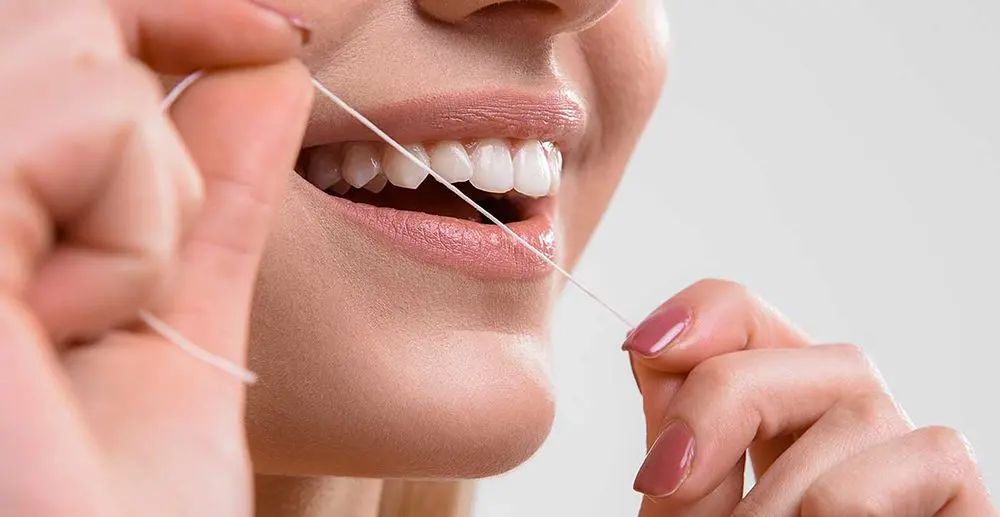
Surely you already know that in order to achieve a good oral hygiene routine, it is necessary to brush your teeth at least twice a day (ideally after meals) and use dental floss at least once a day, but have you ever wondered whether you should use it before or after brushing?
When it comes to achieving the most effective oral hygiene, it is important to know the correct order to follow in your daily oral hygiene routine. This sequence should be the one that removes the most plaque, particles, and residues present in the mouth.
Using dental floss after brushing is the most common habit for most people, as brushing is the culturally best-known procedure for removing bacterial plaque, more convenient, and cleans the majority of the surfaces of the teeth. Nowadays, unfortunately, dental floss is still wrongly viewed as a supplementary method of lesser importance and for occasional use.
Using floss at the end of oral hygiene can allow bacterial plaque and food residues removed by the floss to be deposited on other tooth surfaces without being completely removed; that is, such residues can remain in the mouth until the next brushing.
Should you use dental floss before or after brushing your teeth?
But after all, what is the correct order? The answer is very simple: it all depends on you and your preferences. As long as satisfactory results are achieved, the essential thing is to perform interdental cleaning and have these procedures well established in your daily routine. However, many professionals recommend using floss first to release food residues trapped between the teeth and then remove them with the toothbrush, performing a complete cleaning and enhancing the action of the fluoride present in the toothpaste that can more easily penetrate the interdental space.
Benefits of using dental floss
Using dental floss brings significant benefits regarding the good maintenance of your oral health:
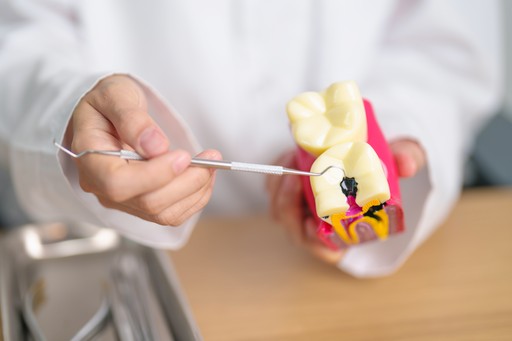
Prevents the appearance of cavity lesions between the teeth since it removes bacterial plaque in those specific points.
Keeps the gums healthy and free from inflammatory signs (swelling and bleeding) as it cleans the gum line and even the infra-gingival space.
Using dental floss prevents the development of gum problems, such as gingivitis and periodontitis, issues that, if left untreated, can contribute to the premature loss of teeth.
Helps reduce halitosis (bad breath) as the cleaning is more complete.
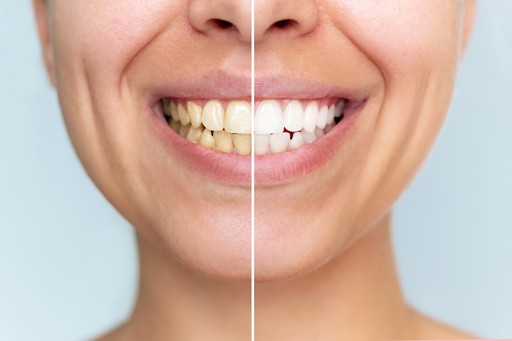
Improves the aesthetics of the smile, preventing the appearance of stains, bacterial plaque, and tartar between the teeth. These residues and pigmentation can only be fully removed during a Dental Hygiene appointment.

Types of dental floss and how to use them correctly
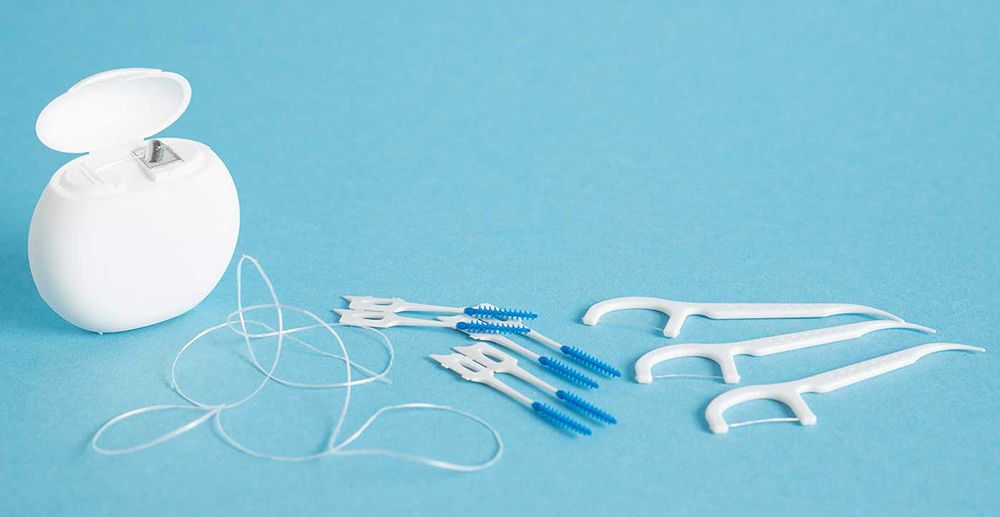
When choosing dental floss, you should consider your preference, but also whether or not you wear braces and even the shape of your teeth. There are several types of dental floss; if you have doubts about what is most suitable for you, consult your dentist or dental hygienist:
Dental floss (multifilament): this is the most common type of floss and is easily found in supermarkets and pharmacies. It is made up of twisted nylon threads in the shape of a cylinder. There is waxed floss (lower likelihood of breaking and can make the passage of floss a smoother experience) and unwaxed. It is not the best option for those with large gaps between their teeth (diastema).
Dental tape (monofilament): has a single wider and flatter filament, which can be easier to handle and insert into the interdental space without fraying, easily removing food debris. Like dental floss, it is not the best option for those with diastemas; in such cases, using an interdental brush (another tool for cleaning between teeth) could be more useful.
Dental floss with applicator: consists of a plastic tool that has a limited portion of floss at one end. It is a useful device when there is a lack of manual dexterity or difficulty in using floss in the more posterior areas of the mouth, also being the best option for starting an interdental cleaning routine in children. These are disposable tools.
Floss threader and Superfloss: the floss threader is not exactly a floss but rather a floss applicator that helps in threading the floss because it is stiffer, functioning like a needle. Superfloss is a specific floss that has a rigid part that aids in insertion and then in its continuity, a very spongy and soft floss that cleans delicate areas. These instruments are recommended for those who have braces, implants, or fixed dental prosthetics.
In addition to choosing the perfect type of dental floss for you, it is also important to know how to use it correctly. Here are the steps you should follow:
1st step
Take the dental floss out of the box and wrap the loose end three times around one of your index fingers. After that, simply measure 20 cm of floss and cut it from the base of the box. From there, wrap the new loose end around the index finger of your other hand until the floss is tight and measures approximately 10 cm.
2nd step
Choose the area where you want to start, but it is helpful to establish a routine so that you do not get confused and do not forget any inter-dental spaces, ensuring the cleaning of all teeth.
3rd step
Start cleaning your teeth. Position the floss in the space between the teeth and move it gently until it reaches the gum and slightly insert it into the gum sulcus (biologically free space that retains many residues). Then, make the opposite movement, dragging it along the side of the tooth from the base to the top. Repeat the process two more times before moving on to the next space.
Do not use the same part of the floss for all spaces; whenever you switch, use a part that has not been used - take a new piece if necessary.
Be mindful of the pressure you apply with each movement; this process should be done slowly and gently. We do not want injuries or cuts on the gums that could risk inflammation or infection.
Remember, schedule a routine visit with your oral hygienist at least twice a year and ensure that everything is well with your oral health. You can make an appointment with MALO CLINIC; we are available to help and support you throughout the years.