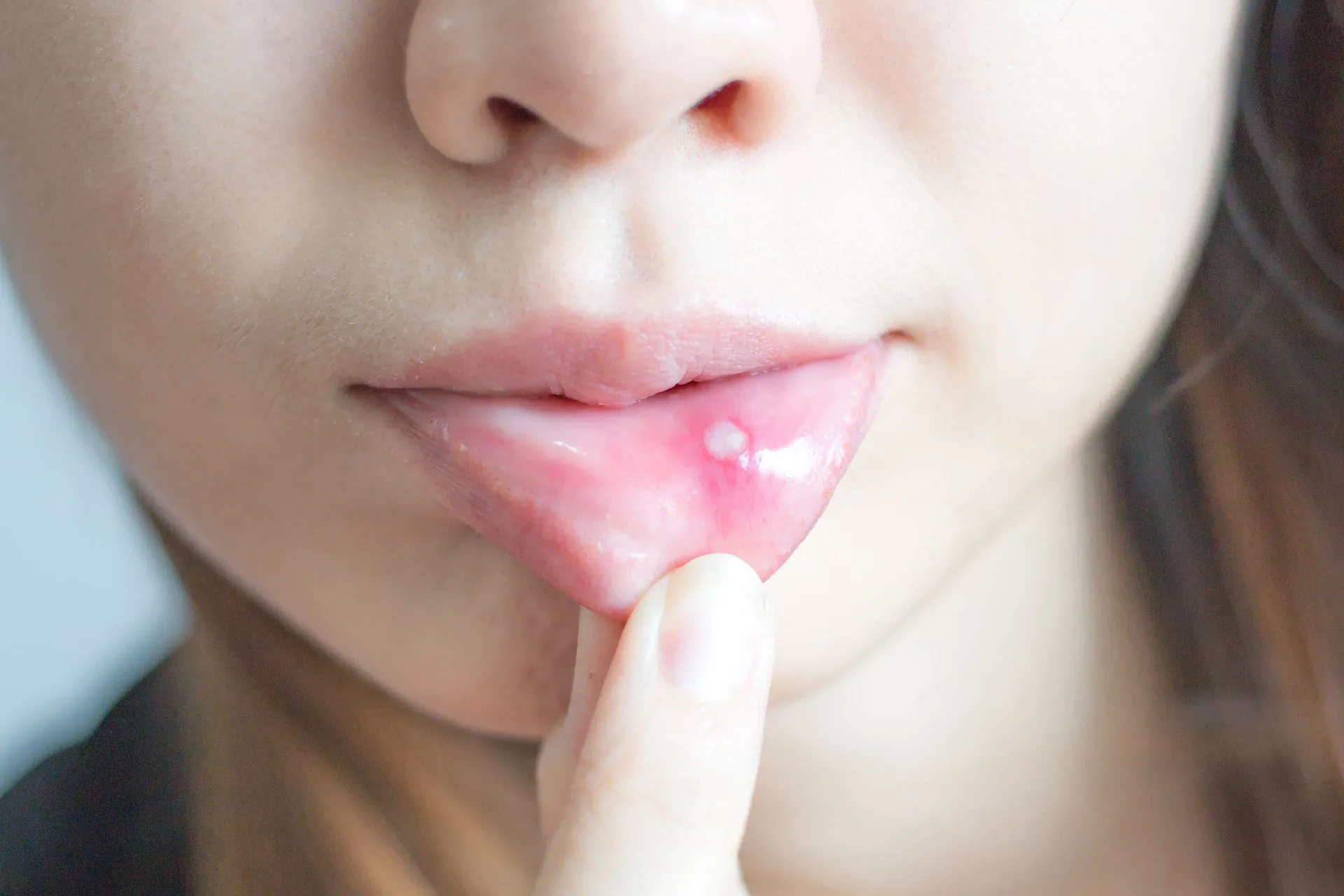
Although they are quite common and generally harmless, disappearing within 7 to 14 days, they can cause considerable discomfort and pain, potentially even compromising functions such as speaking, drinking, or eating. When the ulcers are located in areas other than those mentioned, we are no longer dealing with true canker sores but rather ulcers of various causes. But what causes these lesions? And what are the most common types?
Causes of canker sores
The exact cause is not always clear. However, there are various factors that are often associated with their development. Some of them include:
Injuries in the mouth: Small accidental traumas, such as biting the inside of the cheeks, injuries caused by dental appliances, poorly fitting dentures, or toothbrushes. In this case, we are not dealing with true canker sores but rather traumatic ulcers that can occur in any location of the mouth and throat;
Certain foods: Highly acidic foods (including fruits like oranges and pineapples), spicy foods, nuts, and chocolate are often associated with the appearance of these lesions;
Stress: Both emotional and physical stress can also be associated with the occurrence of canker sores as it alters our immune system's response;
Hormonal changes during the menstrual cycle;
Nutritional deficiencies: A lack of certain vitamins and minerals, such as iron, folic acid, and vitamin B12, may be related to the appearance of canker sores;
Changes in the immune system: diseases that affect the immune system's function or that require treatment with immunosuppressive medications;
Genetic factors: There is also evidence that the predisposition to canker sores may be inherited, being more common in people with a family history.
What are the types of canker sores?
Minor canker sores
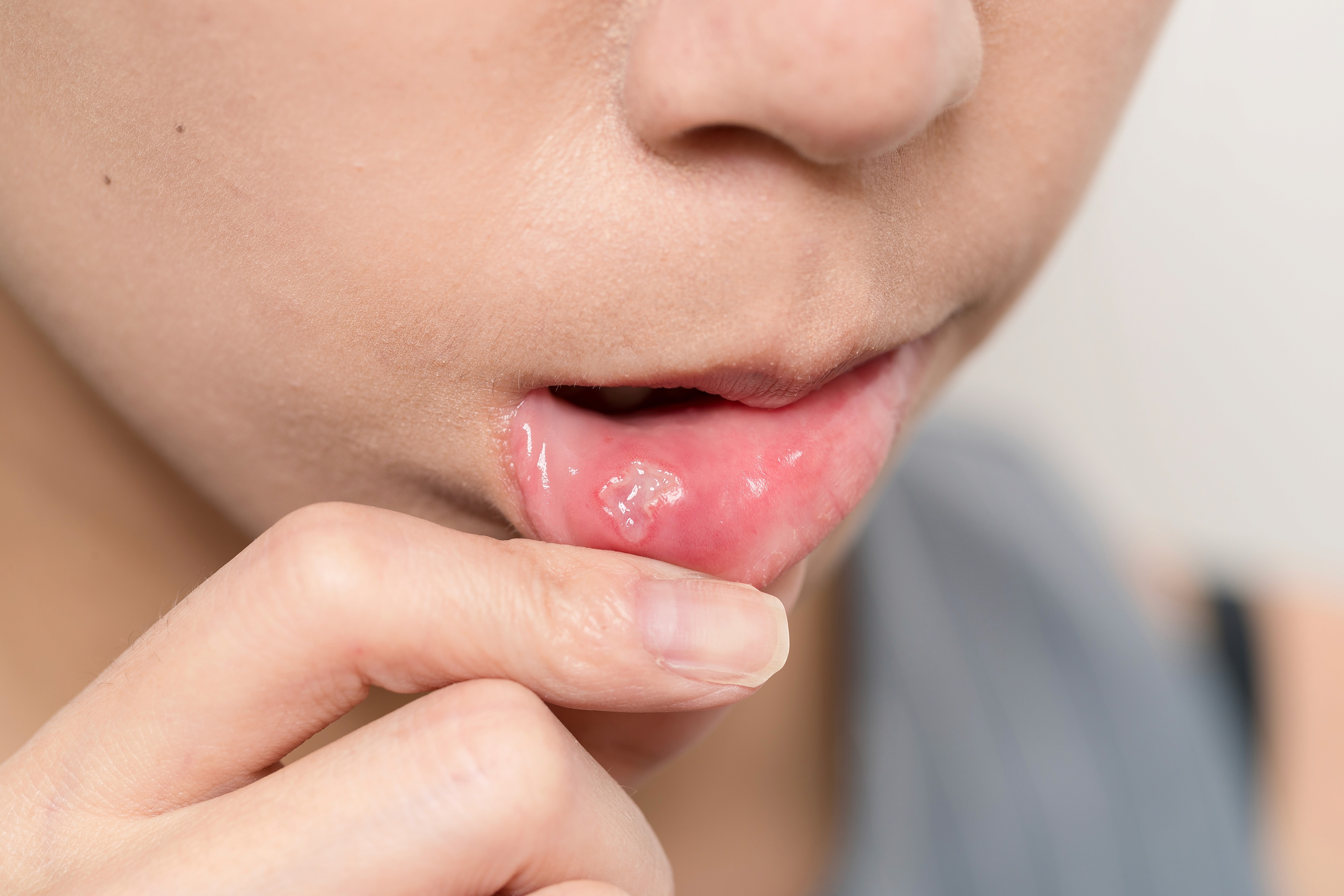
They are superficial ulcers, rounded with a diameter of 5mm to 7mm and circumscribed with a red halo, more voluminous. They are the most common and can appear as a single lesion or multiple lesions. They disappear without leaving a scar in 7 to 10 days;
Major canker sores
They are larger ulcers measuring about 30mm, with a more irregular shape. They are less frequent and have an average duration of 7 to 14 days, possibly leaving a scar.
Canker sores can appear inside the cheek, tongue, floor of the mouth, lips, and non-keratinized gums.
Treatment and prevention
In most cases, they do not require medical treatment and heal on their own. However, some measures may help relieve pain and speed up healing:
Topical ointments: Applying ointments or gels with anesthetic, anti-inflammatory, or regenerating agents can help reduce pain and accelerate healing.
Oral rinses: Mouthwashes with corticosteroids or saline solutions may help control inflammation.
Correction of nutritional deficiencies: If canker sores are caused by a lack of certain nutrients, supplementation with the appropriate vitamins or minerals may be beneficial.
Regarding prevention, avoiding certain foods can help prevent their appearance. Additionally, maintaining good oral hygiene and trying to manage stress are important factors in reducing the frequency of canker sores.
Foods to avoid
Diet plays an important role in the development of canker sores, as some foods can trigger the appearance of lesions and/or worsen their symptoms. Among these foods are:
Acidic foods, such as citrus fruits (orange, lime, lemon, tangerine, pineapple, strawberries), tomato and derivatives, vinegar, and pickled foods.
Very spicy and seasoned foods, such as peppers and hot sauces.
Hard or crunchy foods, such as chips and toasts.
Dried fruits like walnuts, hazelnuts, peanuts, almonds.
Foods with a high salt content, such as some snacks and cheeses.
Chocolate.
Acidic or fizzy drinks, such as citrus fruit juices, soft drinks, or alcoholic beverages, especially wine and beer.
Some practical tips
Avoid very hot or cold foods, as extreme temperatures can further irritate canker sores. Foods and drinks that are at room temperature or slightly warm should be preferred.
Chewing slowly is also important to avoid accidentally biting the sensitive areas of the mouth.
Trying to identify the foods that trigger canker sores allows you to adapt your diet to prevent their appearance and promote a quicker recovery when they occur.
Are canker sores contagious?
Canker sores are not contagious, as they do not have a viral, bacterial, or fungal origin. Due to their location and size, they should not be confused with herpes ulcers (caused by the herpes simplex virus, which are contagious), or other similar lesions that are oral manifestations of systemic diseases such as Behçet's Disease.
For this reason, being able to identify them is essential to ensure effective treatment.
If there are any doubts, unusual symptoms, or if the canker sores persist longer than normal, a dentist should be consulted for diagnosis and to determine the most appropriate treatment.