Types of dental crowns, benefits and care needed to maintain a healthy and beautiful smile!
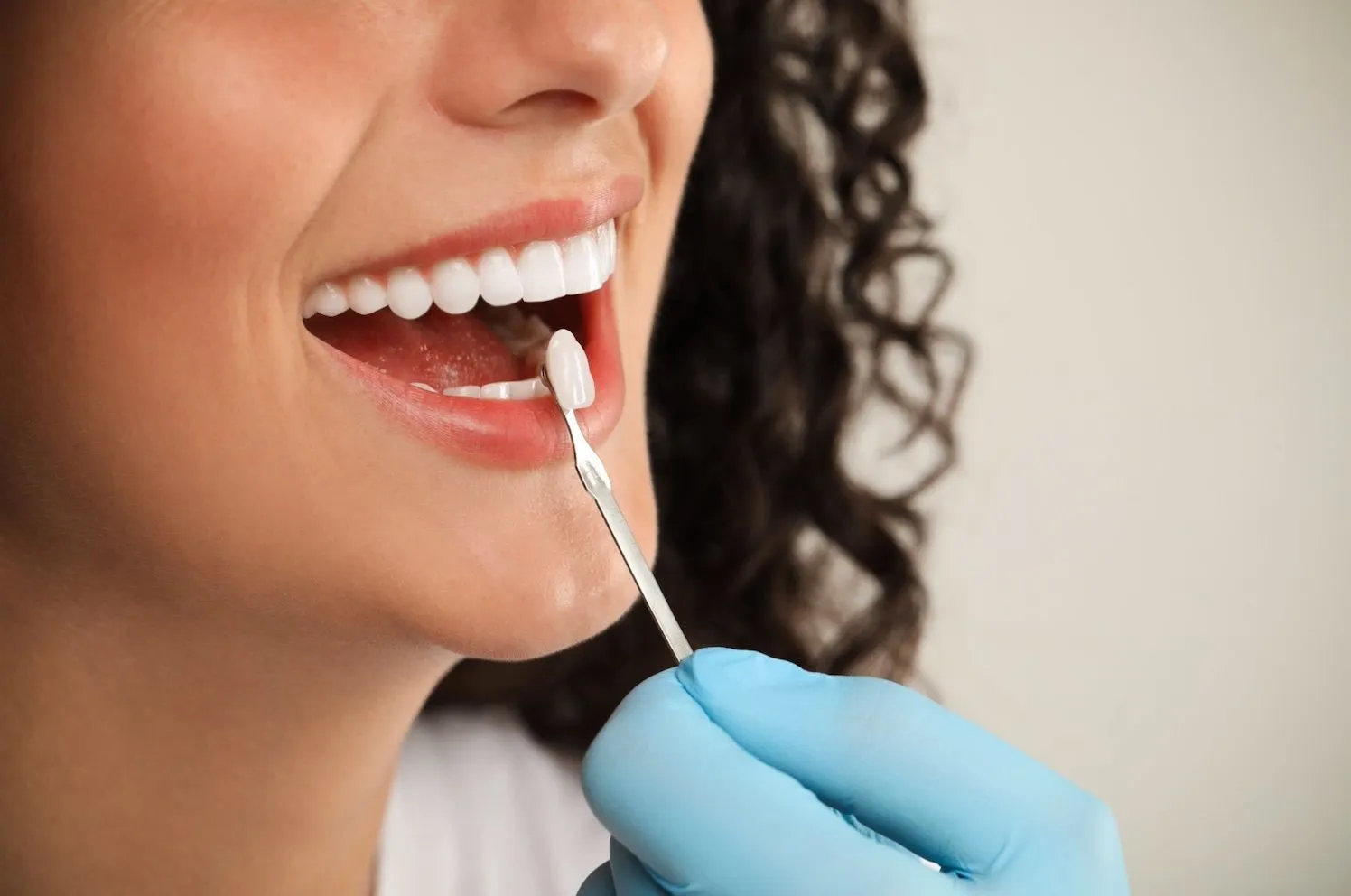
Dental crowns are a fixed rehabilitation treatment that aims to restore tooth structure and function. They act as protective covers that encase the damaged tooth, restoring its shape, size, strength, and appearance. Dental crowns can be made from different materials and are an excellent option for those seeking a long-lasting solution.
When are dental crowns recommended?
Some of the main cases where a dental crown can be a good solution are:
To protect and reinforce teeth that are fractured or worn down, sometimes due to conditions such as bruxism, for example;
After root canal treatment (endodontics), which aims to save the tooth's root and pulp when they are inflamed or infected. In these cases, the crown is placed after the entire procedure to protect the weakened tooth;
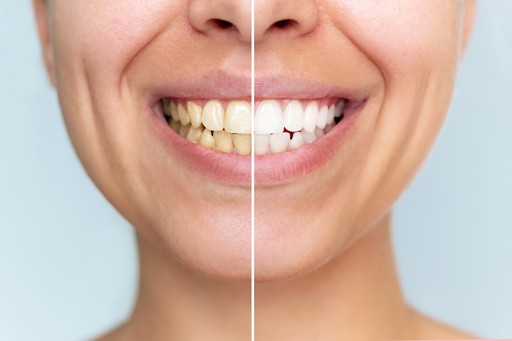
For aesthetic reasons, when there are stains or dental deformities;
To support a dental bridge, which is a prosthesis designed to restore several adjacent teeth in a particular region of the mouth;
What are the types of dental crowns and their main advantages?
There are several types of dental crowns, which can vary according to the patient's needs. Various factors such as the position of the crown in the mouth and the dental condition of the patient can influence the choice of a particular material, while the existence of potential habits, such as teeth grinding, for example, can also be relevant. Some of the most common types of dental crowns are:
Pure ceramic crowns
Main advantages: pure ceramic crowns have a very natural appearance, making them a great solution for restoring front teeth.
Metal crowns
Main advantages: extremely durable, metal crowns are especially beneficial for molar teeth that endure significant chewing pressure.
Zirconia crowns
Main advantages: Through a very strong and durable material, zirconia crowns combine durability with excellent aesthetics.
What is the difference between a dental crown and a dental veneer?
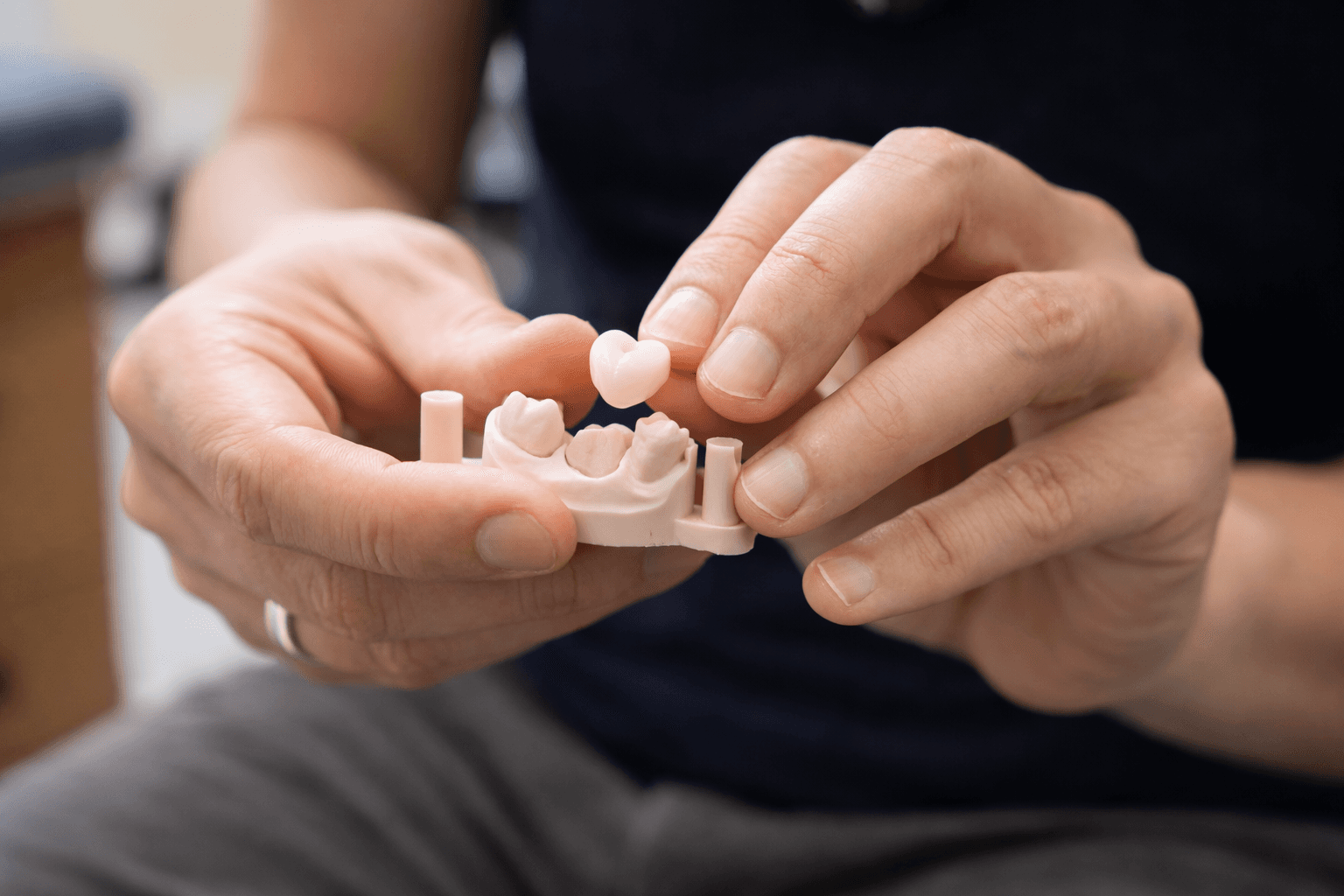
While the dental veneer only covers the visible part of the tooth, the crown envelops the entire tooth, completely covering and protecting it. Thus, dental veneers serve a solely superficial function, primarily used to correct the colour, shape, and size of the teeth.
For this reason, dental veneers are only indicated for small aesthetic defects, such as stains, slight misalignments, or spaces between teeth. Dental crowns, on the other hand, are more suitable for cases that require complete restructuring, such as root canal treatments or extensive cavities.
What is the procedure for placing a dental crown?
The placement of a dental crown usually takes place over a few consultations.
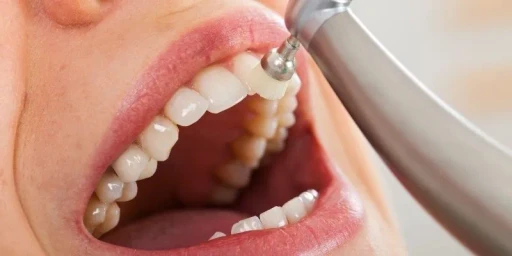
At first, it is necessary to file the tooth so that it has the structure needed to receive the crown.
Using a mould of the tooth, the dental crown is produced in a laboratory. Until the crown is ready, a temporary crown is placed.
Once the final crown is ready, it is placed on the tooth using dental cement or adhesive.
What are the general advantages of dental crowns?
Dental crowns have a very high success rate in dental rehabilitation, not only restoring the aesthetics of the tooth but also its functionality. Depending on the durability of the material used and the patient’s care, dental crowns can be quite resilient and long-lasting.
Care after placing dental crowns
To achieve the desired durability, dental crowns require some basic oral care. Some of these care measures include:
Regular brushing and use of dental floss: Crowns function like a normal tooth, requiring brushing at least twice a day and the use of dental floss. These care measures should include the crowns as well as the natural teeth.
Regular visits to the dentist: Having consultations, examinations, and professional cleanings with the dentist is also essential to help ensure the durability of dental crowns.
Avoid harmful habits: After placing a dental crown, it is important to avoid certain harmful habits to oral health, such as biting hard objects like pens or ice, and nail-biting, as these behaviours, if performed repeatedly, can affect the crown's durability.
Night guards: In cases of bruxism, that is, when the patient grinds their teeth, it is essential to use a night guard that reduces the pressure and friction between the teeth and, consequently, prevents possible damage to the crowns.
When well cared for, dental crowns can last many years and restore both the function and aesthetics of the teeth. For this, it is important to maintain oral hygiene habits and consult the dentist or oral hygienist at least every six months.