Discover how conscious sedation and other techniques can help.
Going to the dentist is, for many people, a source of anxiety and even genuine fear or dread. The fear of the dentist is a common reality that affects both children and adults, and it can have serious consequences for oral health and overall health. Understanding why it happens and how it can be controlled is the first step to overcoming it.
Why the fear of the dentist?
Fear or dread of the dentist has various origins. In many cases, it is associated with past negative experiences, painful treatments, noises from equipment, or simply the fear of the unknown. It is also relatively common for fear to be learned; hearing less positive accounts from family or friends can create a negative expectation even before entering the office.
International statistical data on fear or phobia of dentists indicate that, in general, around 15% to 20% of the global population reports significant anxiety or fear related to visiting the dentist. This phobia, known as “odontophobia,” can be comparable to other anxiety disorders and deserves specialized attention.
Strategies to control fear and anxiety
Overcoming the fear of the dentist is possible through an integrated approach that combines communication, empathy, and specific clinical techniques. A team prepared to recognize signs of anxiety is essential and can make a significant difference in the overall experience.
Behavioural modelling is one of the strategies that can be used. Through accessible and transparent language, explanation of the step-by-step interventions, positive reinforcement, and respect for each person's pace, the dentist helps the patient regain control and confidence during treatment. Fear tends to diminish when the patient feels they can fully trust the professional.

Tips to Reduce Fear of the Dentist
Science shows that the brain reacts to the fear of pain almost in the same way it reacts to actual pain. This means that, even before any intervention, the mere thought of "going to the dentist" can activate brain areas associated with stress. If going to the dentist causes stress, you can adopt some strategies to reduce this anticipatory response, making the experience more comfortable.
Choose a clinic with experienced and empathetic professionals;
Schedule regular routine appointments to avoid complex procedures;
Use breathing and relaxation techniques;
Talk openly with the dentist about your fears;
Get informed about the possibility of conscious sedation.
What is conscious sedation?
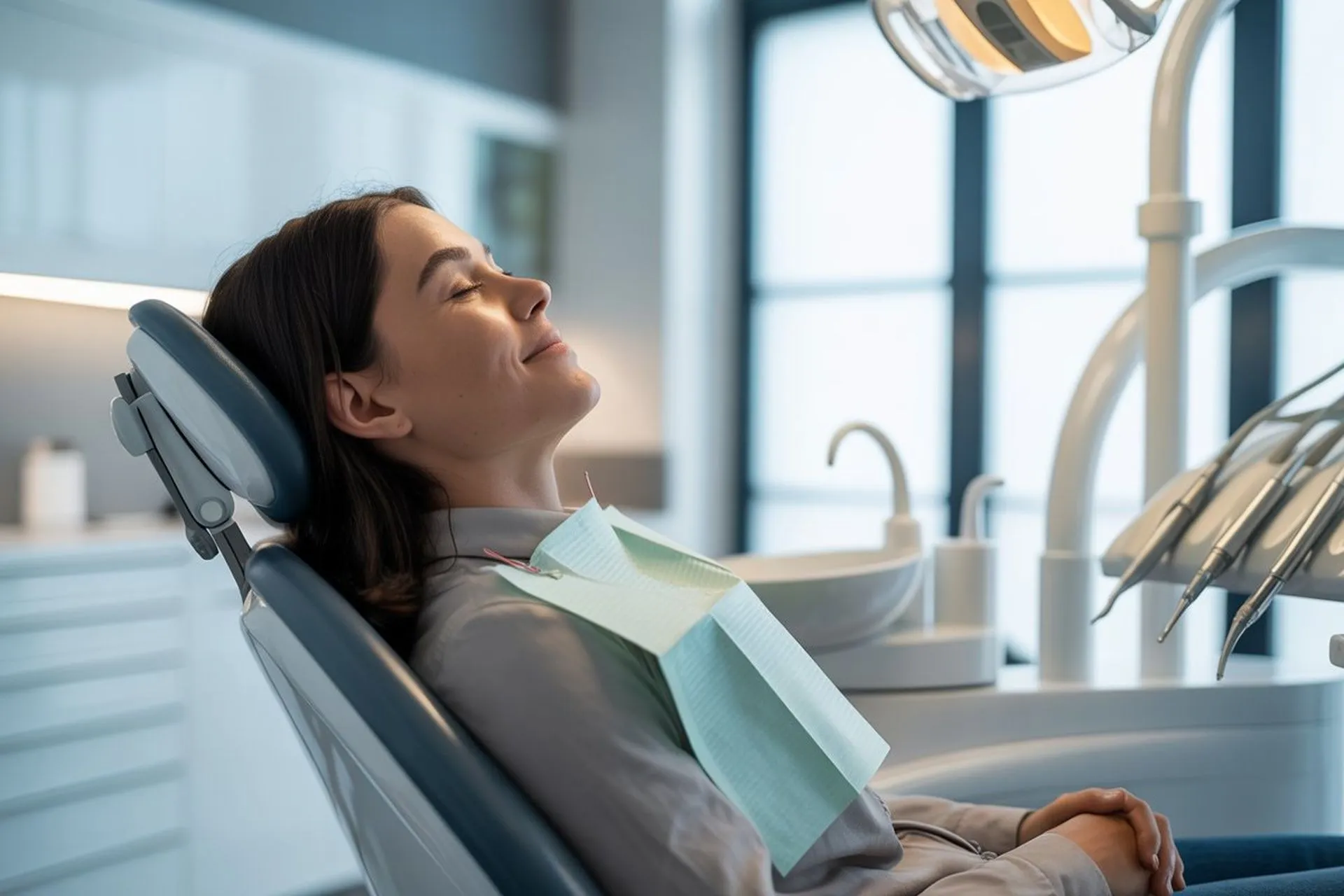
When fear is intense and prevents treatments from being carried out, conscious sedation is a safe and effective solution. One of the most well-known forms is conscious sedation with nitrous oxide, which consists of inhaling a controlled mixture of oxygen and nitrous oxide, allowing the patient to remain awake and cooperative, but deeply relaxed. During the procedure, the patient maintains the ability to breathe autonomously and communicate with the dentist, retaining all natural reflexes.
The effect disappears quickly after the treatment, allowing for a calm recovery without prolonged effects. Suitable for both children and adults, this technique is also especially useful for patients with a pronounced gag reflex, making it easier to remain still for longer treatments to be performed safely.
Benefits of Conscious Sedation with Nitrous Oxide
Significantly reduces anxiety and fear;
Provides a feeling of calm and control;
Acts quickly and the effects wear off a few minutes after completion;
It is safe and suitable for both adults and children;
Allows for complex treatments to be carried out in a serene and comfortable environment.
Moreover, nitrous oxide does not require hospitalization or extended recovery time. The patient can resume their normal routine immediately after the treatment, making it a very practical and safe option.
According to the American Dental Association (ADA), conscious sedation with nitrous oxide is one of the safest forms of sedation in dental medicine. Studies show that it reduces reported stress levels by up to 80% among patients with anxiety related to dental treatments.
Frequently Asked Questions
The fear of the dentist should not be an obstacle to caring for your oral health. At MALO CLINIC, each case is treated in a personalized manner, and the clinical teams are trained to handle different levels of anxiety. Through a medical approach focused on patient comfort or even through the use of conscious sedation, it is possible to have a calm and positive experience. We combine technology, empathy, and clinical experience to transform each visit to the dentist into a moment of trust and well-being.