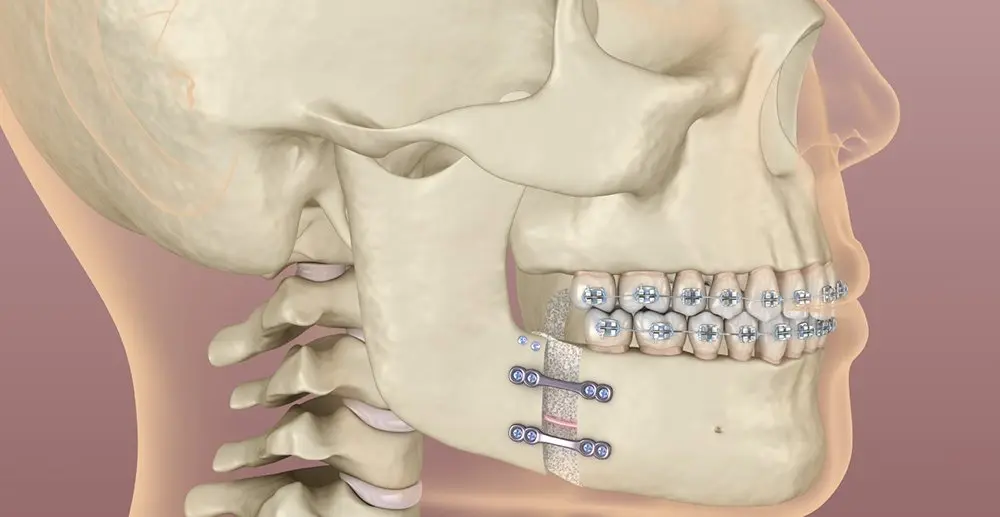
Orthognathic Surgery: Discover what it is
Generally, dentofacial anomalies can be:
Mandibular prognathism or "big chin"
Retrognathism or "small chin"
Gummy smile or "very visible gums"
Open bite or "the teeth do not touch at the front or back"
Crossbite
Facial asymmetry or “crooked face”
Dental asymmetry "midline of the teeth deviated"
These bony disharmonies must be corrected not only for aesthetic reasons but also due to the consequences for health and well-being, namely:
Breathing;
Chewing;
Phonetics;
Temporomandibular joint.
Orthognathic surgery is a specialty of maxillofacial surgery that works together with orthodontics. Thus, it is always necessary to undertake orthodontic treatments before and/or after surgery. Before, it may be necessary to extract teeth and use a dental appliance; after surgery, the finalization of orthodontic treatment will be carried out. The main objectives of orthognathic surgery are to correct dentofacial discrepancies and achieve an ideal balance of the face and teeth, a balanced occlusion, and to improve breathing by allowing efficient airflow through the airway.
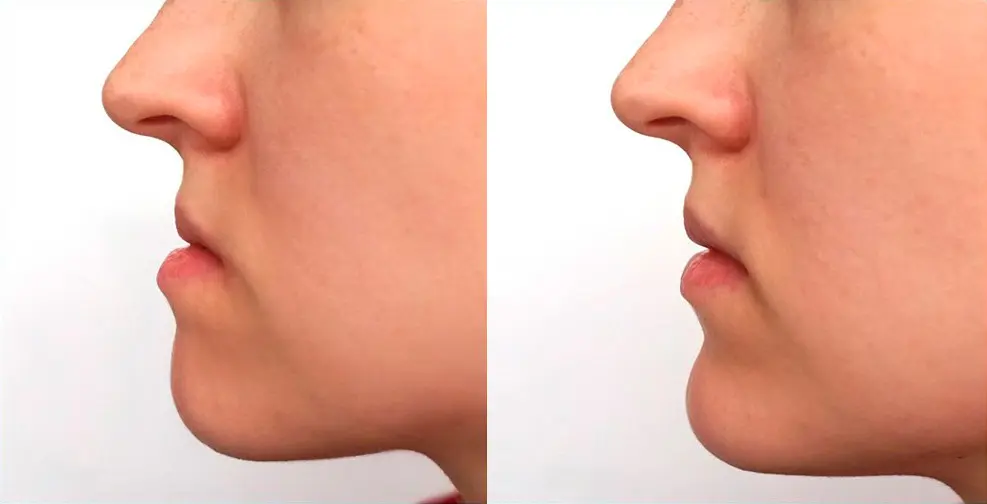
Orthognathic Surgery: How long is the recovery time?
Orthognathic surgery is performed through intraoral access and does not leave visible scars. This does not mean that there is no recovery period. Being a surgery that intervenes in the jaw bones, it requires a mandatory rest period and some limitations until full recovery. The resumption of daily activities varies between 10 and 15 days, but after that, it is still necessary to take some precautions, mainly related to diet. The most common complaints after the surgery are edema (swelling) and bruising on the face. Additionally, the patient may experience a period of paresthesia, which is the reduced sensitivity in the face and can last up to six months.
Orthognathic Surgery: Nutrition
After orthognathic surgery, the diet should be exclusively liquid or soft for at least the 15 days following the procedure. It is essential to follow all the doctor's instructions for proper oral hygiene, as well as regarding the resumption of normal mouth movement.
Consultation with a nutritionist may be recommended to adjust the diet to ensure all nutritional needs of the patient are met. Weight loss is typically one of the side effects of orthognathic surgery, so it is necessary to ensure that the diet is appropriate to prevent malnutrition or dehydration.
Phase one – In the first 1 to 3 days: liquid diet – cold liquids such as teas and juices, strained, ice cream, and yogurt. If indicated by the doctor or nutritionist, dietary supplements may be taken.
Phase two – From the 4th day to the 15th day (approximately): soft/mushy diet, cold or warm in the consistency of purées or broths. Avoid foods that cause inflammation, many seasonings, coffee, chocolate, and sugar.
Phase three – From the 15th day until the doctor's indication: soft food, blended soups, creams, purées of soft or softened foods. Very soft and blended meats. Gradually introduce foods with more consistency, but without chewing.
The intake of liquid and cold foods, besides allowing local rest for the surgical wound, minimizes the natural post-operative bleeding and consequently, reduces the likelihood of hemorrhages. At this stage, the patient should be calm and start to eat carefully, gradually progressing until fully resuming the diet they were accustomed to before the surgery.
At MALO CLINIC we have an experienced team in the field of orthognathic surgery who can help and advise you in the best way. If you think this could be a need for an improvement in your health, we recommend scheduling an evaluation consultation, during which you will learn about the treatment possibilities.