Yellow teeth: which everyday habits are making the problem worse?
Yellow teeth are one of the most common cosmetic concerns in dental medicine. Although many people associate this problem only with the natural ageing of the dentition, the reality is that several everyday habits contribute directly to changes in tooth colour.
Understanding the causes is the first step to prevention and, when necessary, to using effective and safe solutions.
Why do my teeth become yellow?
The colour of teeth results from the combination of enamel (the outermost and translucent layer of the tooth) and dentine (the inner layer, naturally more yellow). Over time, dental enamel can wear down or accumulate pigments, making the dentine more visible.
Studies show that extrinsic factors (such as diet or certain habits such as smoking) and intrinsic factors (age, genetics or medication) influence this colour change, causing yellow teeth.
Everyday habits that contribute to yellowed teeth
Frequent consumption of coffee, tea and red wine
These drinks contain chromogens, substances that adhere to the enamel and cause stains. Coffee, for example, is one of the main causes of tooth pigmentation and yellowed teeth in adults.
Smoking
Tobacco is also highly staining. In addition to its impact on tooth colour, it is always worth noting that tobacco increases the risk of periodontal disease and oral cancer.
Inadequate oral hygiene
Insufficient or incorrect brushing allows plaque and tartar to build up, which encourages the appearance of stains and a yellower hue.
Consumption of food rich in colourants
Sauces such as soy sauce, curry or tomato, as well as red fruits, can contribute to tooth pigmentation when consumed frequently.
Natural ageing
As the years go by, there is a tendency for the natural dentition to age progressively, which can give the teeth a yellower tone.
Improper use of whitening products
Home remedies or the use of certain so-called whitening products without professional supervision can promote enamel wear, making teeth even more susceptible to pigmentation.
How to prevent yellow teeth?
Preventing yellow teeth comes down to small, consistent changes, namely:
Brush your teeth at least twice a day using the correct technique;
Use dental floss daily;
Reduce your intake of highly coloured drinks or rinse your mouth after consuming them. Interestingly, drinking water after coffee or wine can significantly reduce the adherence of pigments to the enamel;
Avoid tobacco;
When everyday measures are not enough
Even with good habits, there may be a colour change that does not respond to preventive measures.
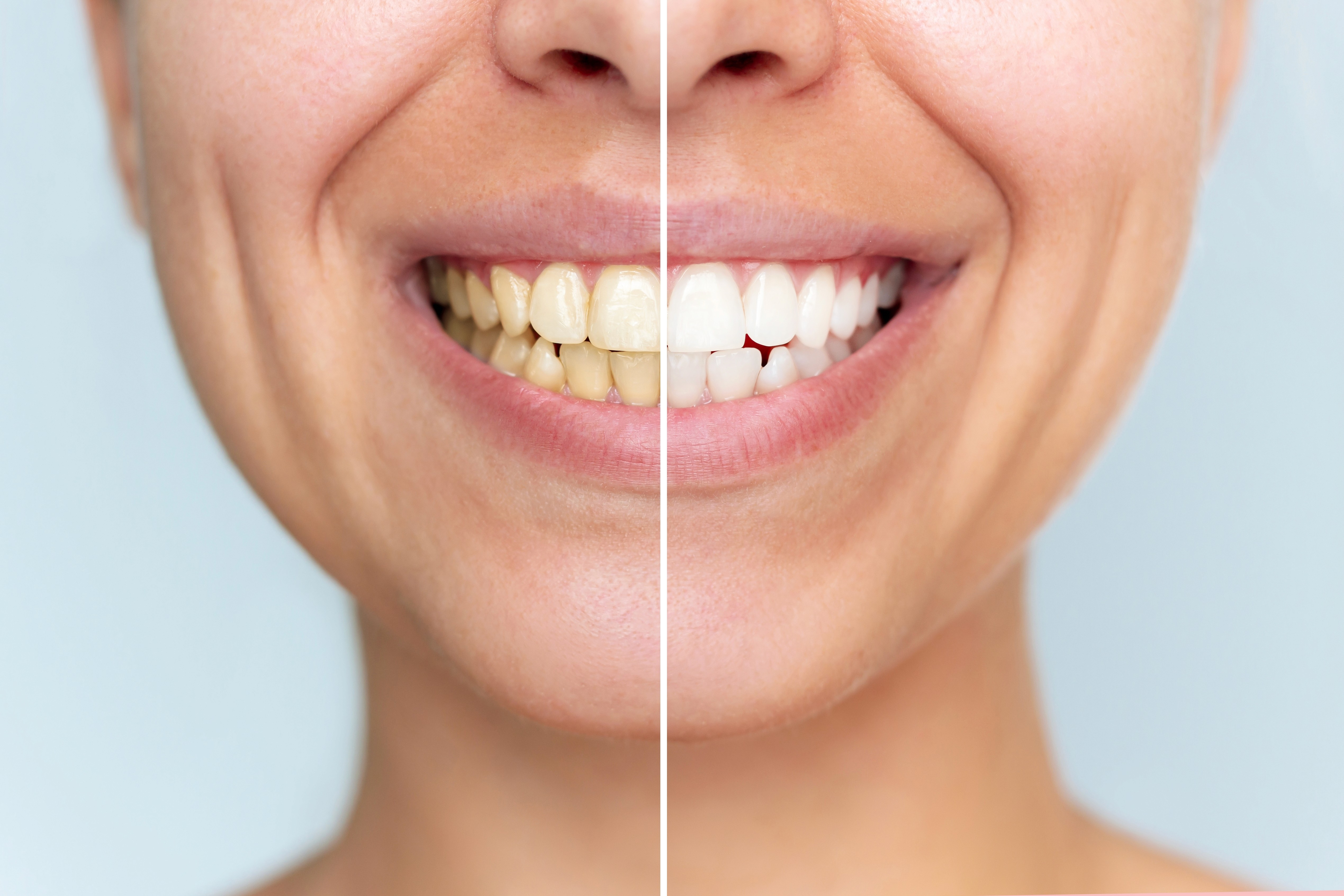
In these cases, teeth whitening with professional monitoring emerges as a safe and effective solution for yellow teeth.
Unlike over-the-counter products, whitening carried out in the clinic or supervised by a dentist ensures:
Preliminary assessment of oral health;
Selection of the most suitable technique for each case;
Control of tooth sensitivity;
More predictable and longer-lasting results.
Clinical studies indicate that professional whitening can safely lighten several shades, provided it is carried out using appropriate protocols.
It is important to note that not all stains respond in the same way to whitening. Therefore, a personalised diagnosis is essential to set realistic expectations depending on each case.
Frequently Asked Questions
Yellowed teeth are, in most cases, a consequence of cumulative habits over time. Adopting a good oral hygiene routine and moderating the consumption of staining substances are essential to prevent yellowed teeth.
When these measures are not enough, professional teeth whitening under professional supervision offers an effective, safe and personalised solution for each case. Investing in health and smile aesthetics is also investing in confidence and quality of life.