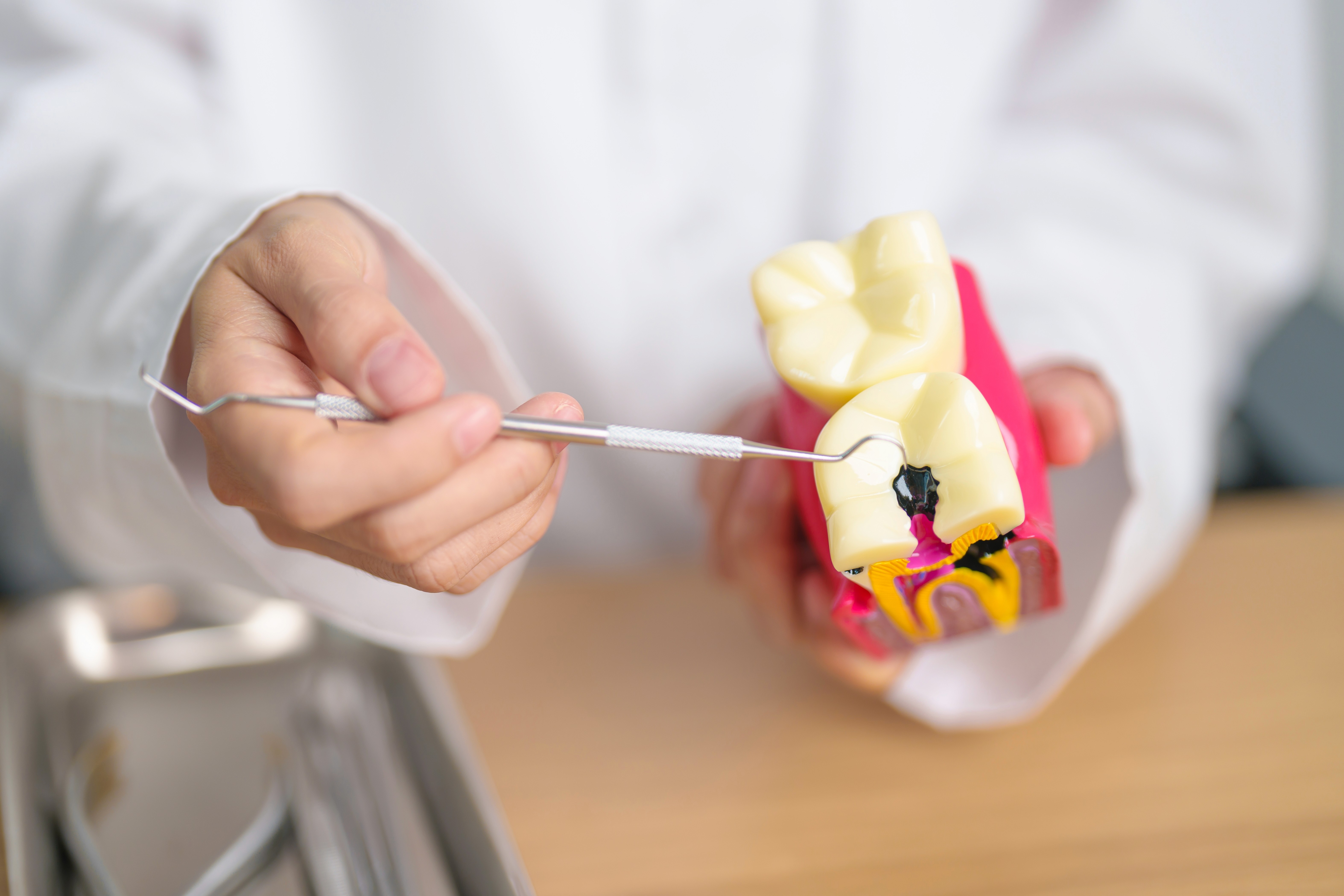
Tooth decay without symptoms: how it develops without pain and when you should be concerned
Tooth decay without symptoms is more common than many people imagine. In many cases, this oral disease can develop silently, without pain or obvious signs, for months or even years.
This makes decay particularly dangerous if proper oral hygiene
measures and regular visits to the dentist are not in place.
Understanding how tooth decay develops, identifying its early signs and knowing how to prevent it is essential to maintain good oral health and minimise the need for more complex treatments in the future.
Why can tooth decay not cause pain?
The explanation lies in the structure of the tooth. In the early stage, the caries lesion affects only the tooth enamel, the outermost and most resistant layer of the tooth. As enamel has no nerve endings, its degradation does not cause pain.
At this stage, tooth decay develops silently, and may only show itself through subtle signs, such as:
White or opaque spots;
Small changes in the texture of the tooth;
Loss of lustre of the enamel.
Without the clinical monitoring provided by regular maintenance appointments, these signs can easily go unnoticed.
How tooth decay progresses over time
The progression of decay occurs in different stages:
1. Demineralisation of the enamel
It is the initial and reversible stage. It results from the action of acids produced by the bacteria present in dental plaque and in tartar.
2. Progression to the dentine
When decay passes through the enamel, it reaches the dentine - a more sensitive structure. Here, the first symptoms associated with caries lesions may appear, such as sensitivity to cold, heat or sweet foods.
3. Involvement of the dental pulp
In an advanced stage, the infection reaches the pulp (where the nerves are), causing intense pain and inflammation.
It is at this stage that many patients seek help - when the situation already requires more invasive treatments and, in extreme cases, can even lead to the premature loss of the tooth.
Main causes of tooth decay
Decay does not arise by chance. It is associated with several factors:
Accumulation of bacterial plaque;
Frequent consumption of sugars;
Insufficient oral hygiene;
Reduced saliva flow;
Difficulty cleaning certain areas, such as the interdental spaces.
Misaligned or crowded teeth can worsen this risk, as they make effective brushing more difficult and favour plaque retention.
How to know if you have decay (even without pain)
Even without pain, there are signs that may indicate the presence of decay:
Tooth sensitivity that is mild and occasional;
Localised darkening on the tooth;
Frequent trapping of food in a specific area;
Small visible cavities.
Still, the safest and most effective way to diagnose it is through a clinical assessment and complementary examinations, such as X-rays.
Why tooth decay is often diagnosed late
There are two main reasons:
1- Lack of early symptoms
As there is no pain, the problem is ignored.
2- Lack of regular appointments
Without check-ups, early lesions are not identified in time.
Result: when the diagnosis is made, the decay is already at a more advanced stage.
The importance of preventing dental caries
Prevention is always the most effective approach. It includes:
Brushing your teeth at least 2 times a day with the proper technique and brushing time
Daily use of dental floss;
Controlling sugar intake (avoiding “snacking” on sweets throughout the day);
Use of fluoride products (fluoride helps strengthen enamel);
Drinking water helps clean the mouth and neutralise acids;
Regular check-ups with the dentist and/or oral hygienist.
Treatment of dental caries: what can you expect
Treatment always depends on the stage of the lesion:
Initial stage: No pain, affects only the enamel, may be reversible with fluoride and control of daily oral hygiene.
Intermediate stage: there may be sensitivity, affects the dentine, dental restoration (filling) is necessary.
Advanced stage: more intense pain, affects the pulp, root canal treatment (endodontic treatment) is necessary .
Does dental caries affect quality of life?
Yes, in addition to pain, untreated caries can affect several areas:
Difficulty chewing;
Aesthetic changes;
Self-esteem issues;
Risk of infections, which in severe cases can spread to the rest of the body.
When should you seek a dentist?
You should book an appointment if:
You have not had a check-up for more than 6 months;
You frequently feel sensitivity;
You notice changes in your teeth;
You have a history of, or a high risk of developing, caries.