
Water flosser: is it worth replacing dental floss?
Find out how a water flosser works, its indications and what benefits it can bring to your oral hygiene, as well as how to choose the right model.
Daily oral hygiene is not limited to brushing your teeth. Although tooth brushing is essential for removing plaque from the tooth surface, there are hard-to-reach areas, especially interdental areas and along the gum line, where its action is limited. In these areas, it may be beneficial to use other oral hygiene methods such as dental floss or a water flosser.
When searching for "irrigador bucal" (mouth flosser), we find what we more correctly refer to as an oral irrigator or water flosser.
More important than the terminology is understanding its role in oral hygiene. Can a water flosser replace dental floss? Is it suitable for everyone? And why might it be of particular importance for patients with dental implants or an implant-supported fixed full denture?
The answer depends, to a large extent, on the clinical situation and the type of existing rehabilitation.
What is a water flosser and how does it work?
The oral irrigator, often searched for as a "water flosser", is a device that projects a targeted jet of water onto specific areas of the oral cavity. The water pressure helps to remove food debris and control the build-up of bacterial plaque.
When used with a tip designed to reach below the gum line, it can function as a subgingival irrigator. There are various types of tips and usage modes available. Therefore, especially when implants or prosthetic rehabilitations are present, the method of use should follow the recommendations of your dentist or dental hygienist.
Water flosser or dental floss: do you really have to choose?
Not necessarily. The question should not merely be about figuring out which of the two is "better", but rather which method is most suitable for each person's specific needs.
What does dental floss do?
Dental floss allows for cleaning the spaces between teeth through mechanical contact with the tooth surfaces, removing plaque from interdental areas. However, it can be more difficult to use in certain situations, particularly when prosthetic or orthodontic structures are present.
Find out how to use dental floss.
And what is the role of a water flosser?
A water flosser uses the action of a water jet and can serve as an additional resource in the oral hygiene routine. It can be particularly valuable when there are areas where access via conventional methods is more complex.
Therefore, it is not correct to claim that an oral irrigator always replaces dental floss. There are patients for whom different tools can be complementary, and others for whom the professional may recommend a specific approach.
Who can a water flosser be especially useful for?
Although it can be used in different contexts, there are situations where oral irrigation deserves particular attention.
Patients with dental implants
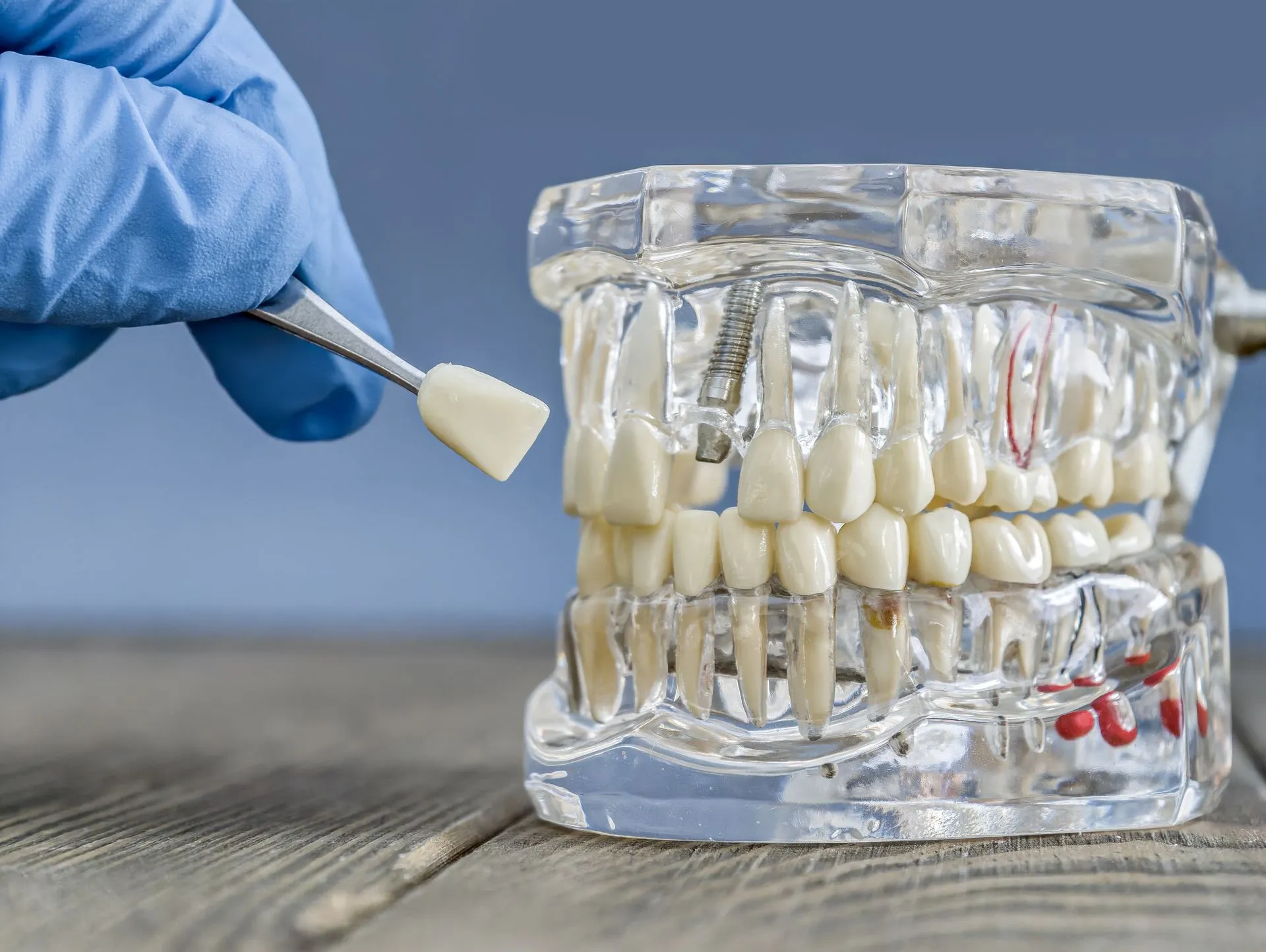
Implants act as structures that replace the roots of missing teeth and can support crowns, bridges, or full fixed prostheses.
Although they are not natural teeth, implant-supported structures require proper daily hygiene. The technique and tools must be chosen according to the position of the implants, the design of the prosthesis, and the condition of the surrounding tissues.
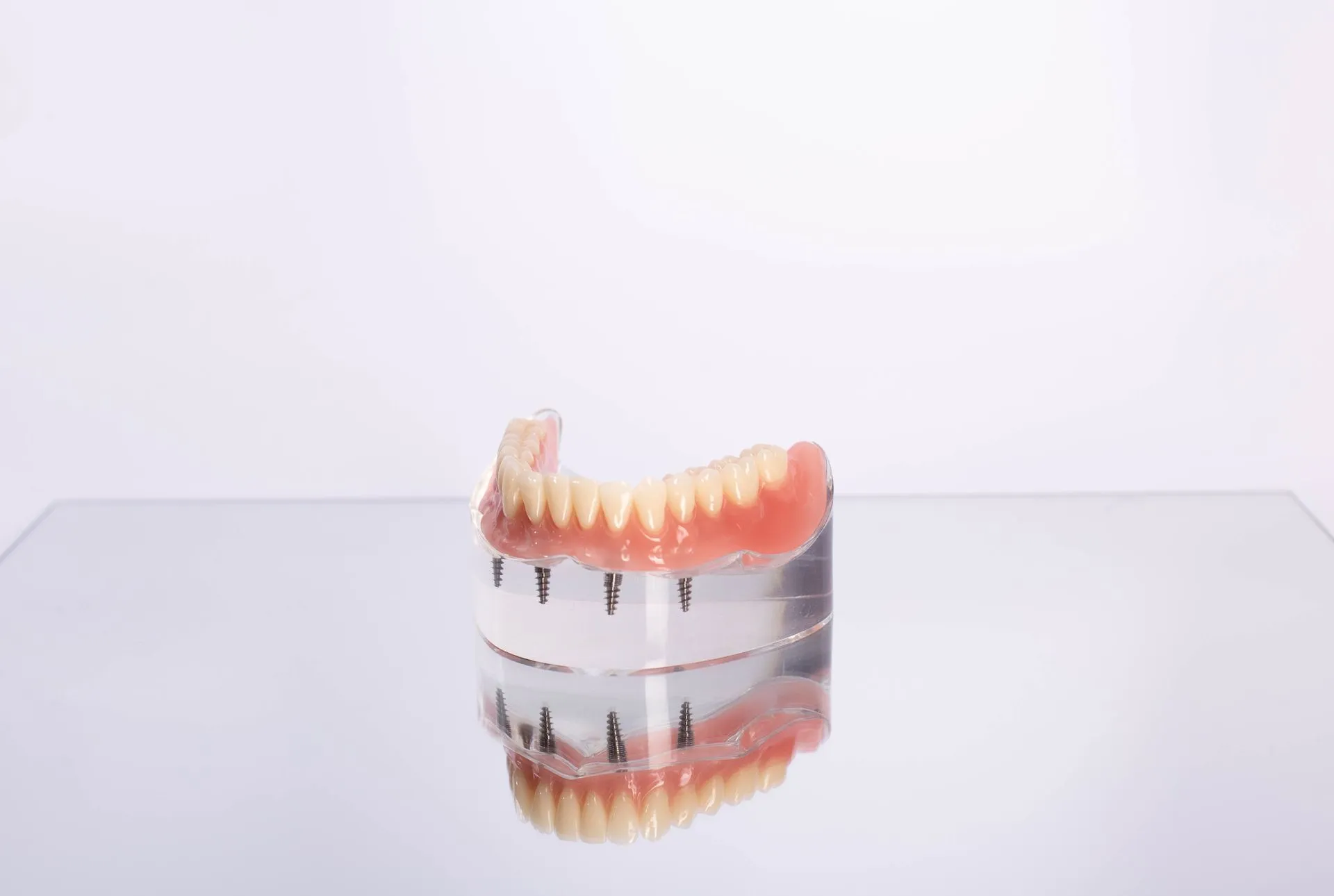
Patients with full fixed prostheses on implants
It is probably in this group that the use of a water flosser, when clinically recommended, is of greatest interest.
In a rehabilitation with a full fixed prosthesis on implants, four implants in each jaw support a fixed prosthesis that covers the full dentition of an arch.
A full fixed prosthesis is not cleaned in exactly the same way as natural teeth. There are areas around the implants and under the prosthetic structure itself that require special attention.
A water flosser can be part of this routine, but it should not be used as a standalone solution or based on a universal recommendation. Brushing, specific interdental cleaning tools, and professional follow-up may be necessary depending on each
rehabilitation.
Clinical experience in this field is particularly relevant: research conducted and published by MALO CLINIC includes long-term studies on full-arch rehabilitations, research on peri-implant pathology, and an implant maintenance protocol.
People with orthodontic braces or fixed prostheses
Orthodontic braces, brackets, wires, bridges, and other elements can create areas that are more challenging to access. In these cases, the water flosser can be considered a complementary hygiene resource, without replacing other recommended care.
People who struggle to use dental floss
Each patient's manual dexterity must also be taken into account. When dental floss becomes difficult to handle correctly, the oral health professional can recommend more suitable alternative or complementary methods.

How to choose an oral irrigator?
Not all devices have the same features, and not all are suitable for subgingival use.
Before choosing, it is helpful to consider:
- The ability to adjust the pressure;
- The availability of different types of tips;
- Ease of handling and cleaning;
- Reservoir capacity;
- Portability;
- Suitability for the intended purpose.
For people with implants or fixed implant-supported prostheses, the most important criterion should not simply be the power of the device. The ideal approach is to first identify where and for what purpose it will be used, and to follow the clinical team's recommendations regarding the appropriate equipment and technique.
Does an oral irrigator replace dental hygiene appointments?
No. Even a rigorous daily routine cannot replace regular assessment and maintenance with a professional.
The appointment allows for the evaluation of the health of teeth, gums, and, where applicable, the tissues surrounding implants, as well as checking the condition of the restoration and adapting oral hygiene methods.
In complex rehabilitations, this follow-up is of particular importance. MALO CLINIC has developed a Maintenance Protocol for cases of fixed implant-supported prostheses.
Frequently Asked Questions
In patients with implants and, in particular, with implant-supported fixed full dentures, this personalisation becomes especially important. Subgingival irrigation may be included in the recommended care, but it should form part of a maintenance strategy defined and monitored by the clinical team. Professional follow-up makes it possible to determine the most appropriate instruments and techniques to preserve oral health and rehabilitation over time.