Cold Sore

Cold sores, or "lip sores", appear as small painful blisters with fluid on the lips, mouth, or oral cavity.

What is Cold Sore?

Cold sores are a viral infection primarily caused by the herpes simplex virus type 1 (HSV-1), which leads to small painful blisters on the lips or around the mouth, evolving into scabs. The virus remains latent and can reactivate with stress, sun exposure, or low immunity. It is highly contagious, spreading through direct contact, kissing, or sharing objects, with transmission possible even without visible lesions.
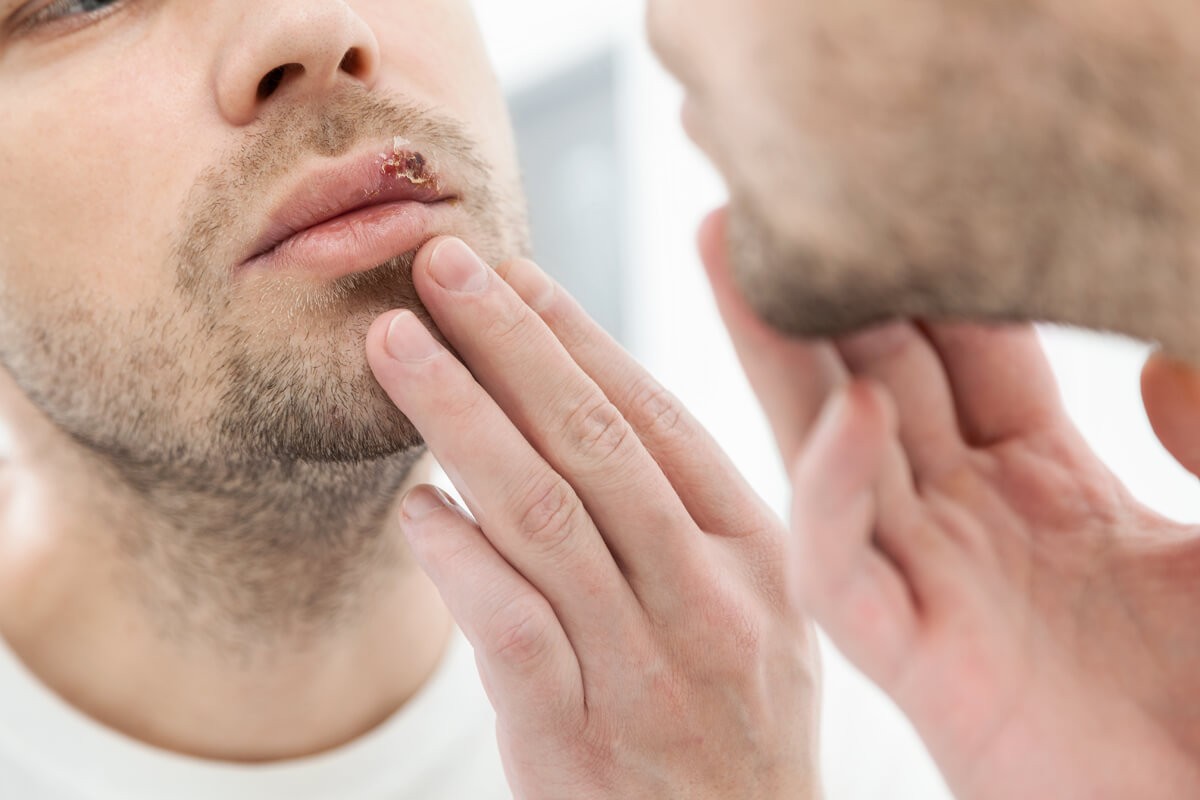
What is Cold Sore?

Main Causes

The development of Cold Sore is generally associated with a combination of factors, including:

Infection with the HSV-1 virus

Contact direct with active injuries

Contact with contaminated objects

Reactivation of the latent virus

Hormonal Changes

Possible Symptoms

The symptoms of Cold Sores vary from person to person and may be more severe during the first infection than in subsequent reactivations. The main signs and symptoms include:

1

1

Ant Nest and Itching

Typically, injuries begin with a sensation of itching, tingling, or burning in the affected area, signaling the start of a viral reactivation.

2

2

Appearance of Vesicles

Small fluid-filled blisters appear in the area of the lips or around the mouth. These blisters can cluster and vary in size.

3

3

Pain and Sensitivity

The vesicles and surrounding areas can be painful, causing discomfort during chewing, speaking, or even at rest.

4

4

Rupture of the Vesicles

The blisters can burst, forming shallow and painful ulcers. These lesions often dry out, forming yellowish crusts before complete healing.

5

5

Fever and Discomfort

In some cases, especially during the primary infection, systemic symptoms such as fever, enlarged lymph nodes, and a general feeling of fatigue may arise.

Marcar Consulta de Avaliação

If the symptoms persist or worsen, it is important to undergo a dental evaluation.

Available Treatments

Available Treatments

Although there is no definitive cure for Cold Sores, there are effective treatments to relieve symptoms, speed up healing, and reduce the frequency of recurrences. Treatment options include:

Local Care

Applying cold compresses to the area affected by cold sores can help relieve pain and reduce swelling. Avoiding touching or manipulating the lesions minimizes the risk of secondary infection. Soothing products, such as aloe vera gel, can also be used.

Applying cold compresses to the area affected by cold sores can help relieve pain and reduce swelling. Avoiding touching or manipulating the lesions minimizes the risk of secondary infection. Soothing products, such as aloe vera gel, can also be used.

Local Care

Applying cold compresses to the area affected by cold sores can help relieve pain and reduce swelling. Avoiding touching or manipulating the lesions minimizes the risk of secondary infection. Soothing products, such as aloe vera gel, can also be used.

Antivirals Topics

Certain antiviral ointments or creams may be applied directly to the lesions to help reduce pain, itching, and healing time. This treatment works by inhibiting the spread of the virus.

Certain antiviral ointments or creams may be applied directly to the lesions to help reduce pain, itching, and healing time. This treatment works by inhibiting the spread of the virus.

Antivirals Topics

Oral Antivirals

In more severe or recurring cases, the doctor may also prescribe antiviral medications orally. These medications help control the proliferation of the herpes simplex virus and reduce the recovery time.

In more severe or recurring cases, the doctor may also prescribe antiviral medications orally. These medications help control the proliferation of the herpes simplex virus and reduce the recovery time.

Oral Antivirals

Care with Hygiene

Keeping the area clean and dry is essential to avoid complications. Washing your hands before and after touching the area is crucial to prevent the spread of the virus to other parts of the body or to other people.

Keeping the area clean and dry is essential to avoid complications. Washing your hands before and after touching the area is crucial to prevent the spread of the virus to other parts of the body or to other people.

Care with Hygiene

Immune Support

Strengthening the immune system with a balanced diet, proper hydration, and quality sleep can help reduce the frequency of crises. Stress reduction practices, such as meditation and physical exercise, are also recommended.

Strengthening the immune system with a balanced diet, proper hydration, and quality sleep can help reduce the frequency of crises. Stress reduction practices, such as meditation and physical exercise, are also recommended.

Immune Support

Agreements and Partnerships

MALO CLINIC has agreements and partnerships that make it easier to access treatment, under specific conditions defined by each entity. You can also choose payment facilities depending on the type of treatment.

Agreements and Partnerships

MALO CLINIC has agreements and partnerships that make it easier to access treatment, under specific conditions defined by each entity. You can also choose payment facilities depending on the type of treatment.

Agreements and Partnerships

MALO CLINIC has agreements and partnerships that make it easier to access treatment, under specific conditions defined by each entity. You can also choose payment facilities depending on the type of treatment.

Frequently Asked Questions

1

Is Cold Sore contagious?

Yes, cold sores are highly contagious, especially during the vesicle stage. The virus can be transmitted through direct contact with the lesions or through contaminated objects, such as utensils, cups, or towels.

2

Is it possible to prevent Cold Sores?

Although it is not possible to completely avoid Cold Sores, measures such as avoiding contact with active lesions, using lip balm with sun protection, and keeping the immune system strong can help prevent reactivations.

3

How long does an episode of Cold Sores last?

The duration varies, but symptoms usually disappear within 7 to 10 days. Treatment may reduce this period.

4

Can stress cause cold sores?

Yes, emotional or physical stress is one of the main triggers for a herpes outbreak. This happens because stress weakens the immune system, making the body more susceptible to outbreaks of the virus.

5

Can injuries leave scars?

It is not common, but manipulated or infected injuries can lead to scars.

6

Can I use makeup to conceal the injuries?

It is not recommended, as it may aggravate irritation and increase the risk of infection.

7

Can children have cold sores?

Yes, the virus can affect people of all ages. In children, the first infection can be more symptomatic. It is worth noting that in some cases, herpes can be transmitted during vaginal delivery if the mother is infected with the virus (vaginal) at the time of birth. It is important to be aware that Herpes Labialis during pregnancy does not necessarily pass the virus to the baby. However, if it is not treated, it can spread to the vaginal area – causing genital herpes – which is particularly dangerous for newborns.

8

Is there a vaccine for Cold Sores?

Currently, there is no specific vaccine to prevent Cold Sores.

9

Is kissing someone with Cold Sores dangerous?

Yes, it is one of the most common ways of transmitting the virus.

10

What is the difference between cold sores and canker sores?

Aphthae are not caused by viruses and are not contagious, while Oral Herpes has a viral origin and can be transmitted.

11

Can cold sores be transmitted even without visible symptoms?

Yes, even in the absence of symptoms, the virus can be transmitted, a phenomenon known as "asymptomatic transmission".

1

Is Cold Sore contagious?

Yes, cold sores are highly contagious, especially during the vesicle stage. The virus can be transmitted through direct contact with the lesions or through contaminated objects, such as utensils, cups, or towels.

2

Is it possible to prevent Cold Sores?

Although it is not possible to completely avoid Cold Sores, measures such as avoiding contact with active lesions, using lip balm with sun protection, and keeping the immune system strong can help prevent reactivations.

3

How long does an episode of Cold Sores last?

The duration varies, but symptoms usually disappear within 7 to 10 days. Treatment may reduce this period.

4

Can stress cause cold sores?

Yes, emotional or physical stress is one of the main triggers for a herpes outbreak. This happens because stress weakens the immune system, making the body more susceptible to outbreaks of the virus.

5

Can injuries leave scars?

It is not common, but manipulated or infected injuries can lead to scars.

6

Can I use makeup to conceal the injuries?

It is not recommended, as it may aggravate irritation and increase the risk of infection.

7

Can children have cold sores?

Yes, the virus can affect people of all ages. In children, the first infection can be more symptomatic. It is worth noting that in some cases, herpes can be transmitted during vaginal delivery if the mother is infected with the virus (vaginal) at the time of birth. It is important to be aware that Herpes Labialis during pregnancy does not necessarily pass the virus to the baby. However, if it is not treated, it can spread to the vaginal area – causing genital herpes – which is particularly dangerous for newborns.

8

Is there a vaccine for Cold Sores?

Currently, there is no specific vaccine to prevent Cold Sores.

9

Is kissing someone with Cold Sores dangerous?

Yes, it is one of the most common ways of transmitting the virus.

10

What is the difference between cold sores and canker sores?

Aphthae are not caused by viruses and are not contagious, while Oral Herpes has a viral origin and can be transmitted.

11

Can cold sores be transmitted even without visible symptoms?

Yes, even in the absence of symptoms, the virus can be transmitted, a phenomenon known as "asymptomatic transmission".

Book your
Appointment

Fill out the form and our team will get in touch with you to schedule your appointment.

Book your
Appointment

Fill out the form and our team will get in touch with you to schedule your appointment.

Book your
Appointment

Fill out the form and our team will get in touch with you to schedule your appointment.

We accompany each step of your clinical journey, focusing on your comfort, confidence, and smile.

@ 2026 ALL RIGHTS RESERVED - MALO CLINIC SA NIF 503411434 ERS No. 12920

Desenvolvido por

We accompany each step of your clinical journey, focusing on your comfort, confidence, and smile.

@ 2026 ALL RIGHTS RESERVED - MALO CLINIC SA NIF 503411434 ERS No. 12920

Desenvolvido por