Bruxism
Crossbite
Tartar
Cavity
Dental Abscess
Cold Sore
Aphthae
Xerostomia
Gingivitis
Periodontitis
Jaw or Orofacial Pain
Bruxism
Crossbite
Tartar
Cavity
Dental Abscess
Cold Sore
Aphthae
Xerostomia
Gingivitis
Periodontitis
Jaw or Orofacial Pain
Bruxism
Crossbite
Tartar
Cavity
Dental Abscess
Cold Sore
Aphthae
Xerostomia
Gingivitis
Periodontitis
Jaw or Orofacial Pain
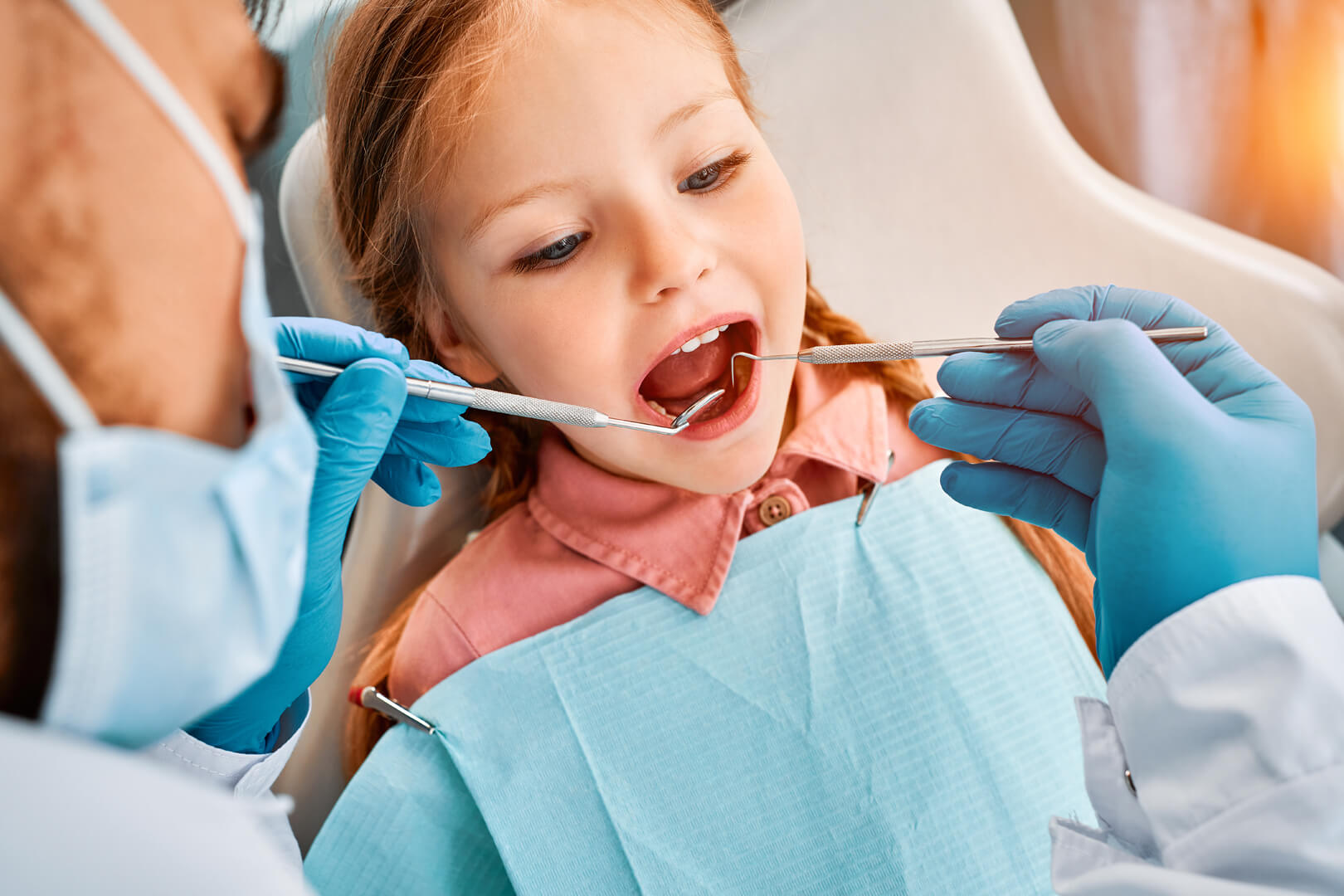
Pediatric Dentistry
Maintenance of the oral health of children, adolescents, and patients with special needs.
About the specialty of Pediatric Dentistry
Pediatric dentistry is the specialty of Dental Medicine exclusively dedicated to maintaining the oral health of children, adolescents, and patients with special needs.
The pediatric dentist works in the prevention of oral pathology, as monitoring the development of the so-called “milk teeth” is essential not only to ensure proper phonetic and chewing functions but also, and above all, to diagnose and prevent potential problems early, ensuring a healthy permanent dentition.
Pediatric dentists are trained to handle the specific needs of children, using approaches that make dental visits more enjoyable and welcoming.

Benefits of Pediatric Dentistry for Oral Health
1
1
Prevention of Dental Problems
Pediatric dentistry focuses on prevention, providing guidance on oral hygiene and healthy diets.
2
2
Oral Health Education
In addition to treatments, the pediatric dentist educates children and parents about the importance of oral health and how to maintain it.
3
3
Personalised Treatment
All treatments are carried out taking into account the specificities of the age groups in question: smaller body and oral dimensions, growing skull and jaw bone, dynamic eruption process of the dentition, and the presence of milk teeth, among others.
4
4
Dental development tracking
Diagnosis and treatment of anomalies in the development of teeth and jaws.
Clinical Cases
Real cases that demonstrate a rigorous clinical approach, focusing on the recovery of function, aesthetics, and quality of life.
The disclosure of cases was expressly authorized by the patients who unreservedly consented to their public exposure, as the disclosed informational elements are objectively true and can thus contribute to the free and informed choice of other patients.
The disclosure of cases was expressly authorized by the patients who unreservedly consented to its public publication, as the disclosed informative elements are objectively true and can thus contribute to the free and informed choice of other patients.
What pathologies can the specialty of Pediatric Dentistry treat?
Dental Caries
Frequent consumption of sugars associated with poor brushing often results in the emergence of cavities. If untreated, cavities can lead to the early loss of milk teeth, often with consequences for the positioning and alignment of the permanent dentition.
Frequent consumption of sugars associated with poor brushing often results in the emergence of cavities. If untreated, cavities can lead to the early loss of milk teeth, often with consequences for the positioning and alignment of the permanent dentition.
My Occlusion
Early identification of alignment and bite problems and implementation of functional orthopedic treatments of the jaws or referral to orthodontics if necessary.
Early identification of alignment and bite problems and implementation of functional orthopedic treatments of the jaws or referral to orthodontics if necessary.
Defects in Enamel
Enamel defects are a risk factor for dental caries and require specific dental treatment. Among the most common enamel defects is Incisor-Molar Hypomineralization.
Enamel defects are a risk factor for dental caries and require specific dental treatment. Among the most common enamel defects is Incisor-Molar Hypomineralization.
Clinical Team
Clinical Team
An experienced and qualified medical team, dedicated to safe, personalized, and patient-centered clinical support.
An experienced and qualified medical team, dedicated to safe, personalized, and patient-centered clinical support.

Eliana Castro

Filipa Maria Roque

Inês Aguiar

Marialice Fernandes

Sara Pestana

Vânia Oliveira

Vera Barroso January
Eliana Castro
Filipa Maria Roque
Inês Aguiar
Marialice Fernandes
Sara Pestana
Vânia Oliveira
Vera Barroso January
Agreements and Partnerships
MALO CLINIC has agreements and partnerships that make it easier to access treatment, under specific conditions defined by each entity. You can also choose payment facilities depending on the type of treatment.




Agreements and Partnerships
MALO CLINIC has agreements and partnerships that make it easier to access treatment, under specific conditions defined by each entity. You can also choose payment facilities depending on the type of treatment.
Agreements and Partnerships
MALO CLINIC has agreements and partnerships that make it easier to access treatment, under specific conditions defined by each entity. You can also choose payment facilities depending on the type of treatment.
Frequently Asked Questions
1
What to expect from the first orthopaedic consultation?
Your child's first visit to the pediatric dentist is one of the most important appointments that the child has with us, if not the most important. During this appointment, the child becomes familiar with the space, the instruments, and the Pediatric Dentistry team.
The pediatric dentist assesses the child's risk of cavities, addressing topics such as diet and brushing, which are fundamental for maintaining proper oral health. A cleaning and the application of topical fluoride are also carried out, as well as intraoral radiographs if necessary. Pediatric dentistry appointments typically last from 15 to 30 minutes.
At the end of the pediatric dentistry appointment, the diagnosis is explained to the parents, and the treatment plan is established.
In the absence of oral pathology, the child should visit the dentist at least every 6 months for a routine appointment, which includes oral cleaning and the topical application of fluoride.
2
When should I take my child to the pediatric dentist for the first time?
It is recommended to take the child to the pediatric dentist when the first tooth appears or, at the latest, by their first birthday.
3
Do milk teeth really need special care, since they will eventually fall out?
Yes, primary teeth are important for chewing, speaking, and maintaining space for permanent teeth. Taking care of them is essential for the child's future oral health.
4
What to do if my child is afraid of going to the dentist?
The Pediatric Dentist has specific training to deal with a child's fear and anxiety, transforming the dental appointment into a positive and pleasant experience.
Through appropriate language suitable for the child's age, positive reinforcement, explanation of all steps of the appointment prior to their execution, among other techniques, it is possible to establish a communication channel between the pediatric dentist and the child, calming them.
If basic behavior control techniques are not enough to reassure the child, it is possible to resort to other solutions.
At MALO CLINIC, we have available the technique of conscious sedation through the inhalation of nitrous oxide and oxygen, aimed at patients with mild to moderate anxiety. For patients with severe anxiety, there is the possibility of performing dental treatments under other types of sedation. Our Pediatric Dentists have extensive experience in carrying out these treatments.
5
What is the topical application of sealants and why is it important?
To prevent the appearance of carious lesions, the application of fissure sealant during the Paediatric Dentistry consultation is common. The sealant is a varnish that, when applied to healthy teeth, protects the chewing surface, preventing the onset of cavities. The sealing of teeth is not universal and is indicated in specific cases as assessed by the Paediatric Dentist.
6
How can I prevent cavities in my child?
Encourage good oral hygiene from an early age, including brushing with toothpaste that has the appropriate concentration of fluoride for the child’s age and using dental floss. Avoid excessive sugar consumption and make regular visits to the pediatric dentist for check-ups and fluoride applications.
1
What to expect from the first orthopaedic consultation?
Your child's first visit to the pediatric dentist is one of the most important appointments that the child has with us, if not the most important. During this appointment, the child becomes familiar with the space, the instruments, and the Pediatric Dentistry team.
The pediatric dentist assesses the child's risk of cavities, addressing topics such as diet and brushing, which are fundamental for maintaining proper oral health. A cleaning and the application of topical fluoride are also carried out, as well as intraoral radiographs if necessary. Pediatric dentistry appointments typically last from 15 to 30 minutes.
At the end of the pediatric dentistry appointment, the diagnosis is explained to the parents, and the treatment plan is established.
In the absence of oral pathology, the child should visit the dentist at least every 6 months for a routine appointment, which includes oral cleaning and the topical application of fluoride.
2
When should I take my child to the pediatric dentist for the first time?
It is recommended to take the child to the pediatric dentist when the first tooth appears or, at the latest, by their first birthday.
3
Do milk teeth really need special care, since they will eventually fall out?
Yes, primary teeth are important for chewing, speaking, and maintaining space for permanent teeth. Taking care of them is essential for the child's future oral health.
4
What to do if my child is afraid of going to the dentist?
The Pediatric Dentist has specific training to deal with a child's fear and anxiety, transforming the dental appointment into a positive and pleasant experience.
Through appropriate language suitable for the child's age, positive reinforcement, explanation of all steps of the appointment prior to their execution, among other techniques, it is possible to establish a communication channel between the pediatric dentist and the child, calming them.
If basic behavior control techniques are not enough to reassure the child, it is possible to resort to other solutions.
At MALO CLINIC, we have available the technique of conscious sedation through the inhalation of nitrous oxide and oxygen, aimed at patients with mild to moderate anxiety. For patients with severe anxiety, there is the possibility of performing dental treatments under other types of sedation. Our Pediatric Dentists have extensive experience in carrying out these treatments.
5
What is the topical application of sealants and why is it important?
To prevent the appearance of carious lesions, the application of fissure sealant during the Paediatric Dentistry consultation is common. The sealant is a varnish that, when applied to healthy teeth, protects the chewing surface, preventing the onset of cavities. The sealing of teeth is not universal and is indicated in specific cases as assessed by the Paediatric Dentist.
6
How can I prevent cavities in my child?
Encourage good oral hygiene from an early age, including brushing with toothpaste that has the appropriate concentration of fluoride for the child’s age and using dental floss. Avoid excessive sugar consumption and make regular visits to the pediatric dentist for check-ups and fluoride applications.
Book your
Appointment
Fill out the form and our team will get in touch with you to schedule your appointment.
Book your
Appointment
Fill out the form and our team will get in touch with you to schedule your appointment.
Book your
Appointment
Fill out the form and our team will get in touch with you to schedule your appointment.
We accompany each step of your clinical journey, focusing on your comfort, confidence, and smile.
THE MALO CLINIC
Talk to us
(Call to the national fixed network)
@ 2026 ALL RIGHTS RESERVED - MALO CLINIC SA NIF 503411434 ERS No. 12920
Developed by
We accompany each step of your clinical journey, focusing on your comfort, confidence, and smile.
THE MALO CLINIC
Talk to us
(Call to the national fixed network)
@ 2026 ALL RIGHTS RESERVED - MALO CLINIC SA NIF 503411434 ERS No. 12920
Developed by