Aphthae

Canker sores are small painful lesions that appear on the oral mucosa, including the inner part of the cheeks, lips, and tongue.

What are mouth ulcers?

Aphthae, or aphthous ulcers, are small painful lesions that appear on the oral mucosa (cheeks, lips, tongue, and non-keratinized gums). They have a whitish or yellowish appearance with a red halo, are benign and non-contagious, but can cause discomfort when eating and speaking. There are three types: Minor Aphthae, the most common, small and fast healing; Major Aphthae, larger and deeper, potentially leaving scars; and Herpetiform Aphthae, multiple and very painful, although not related to herpes.
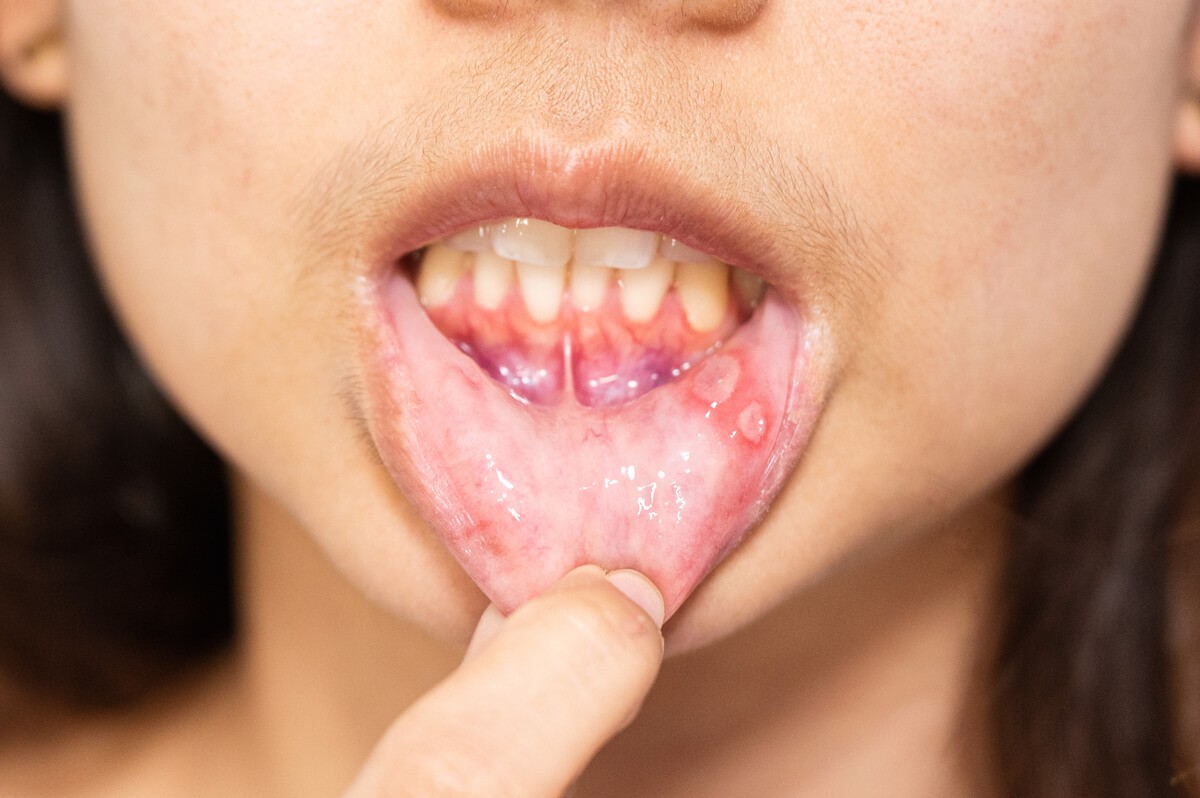
What are mouth ulcers?

Main Causes

The causes of Canker sores are not entirely understood, but some factors prevail, including:

Stress

Nutrition

Hormonal Changes

Immune changes

Genetic predisposition

Possible Symptoms

Some of the most common symptoms of canker sores include:

1

1

Pain and Discomfort

The presence of pain is one of the most evident signs of an ulcer, which intensifies when consuming acidic, spicy, or very hot foods. The pain can vary in intensity depending on the size and location of the lesion.

2

2

Small Circular or Oval Lesions

Generally smaller than 1cm, these ulcers appear isolated or in groups, depending on the severity. Herpetiform ulcers, for example, can present multiple lesions that merge.

3

3

Redness Around the Lesions

The edges often show a reddish coloration, indicating inflammation in the affected area. This sign is particularly visible in larger lesions.

4

4

Difficulty in Eating and Speaking

The discomfort caused can make it difficult to chew and articulate words, especially if the ulcer is in movable areas of the mouth, such as the tongue or lips.

5

5

Local Swelling

In some cases, there may be a slight swelling around the ulcer, aggravating the discomfort. This swelling can interfere with the mobility of the affected area.

Marcar Consulta de Avaliação

If the ulcers persist, worsen, or if you notice frequent lesions in the oral mucosa, professional follow-up is essential to identify causes and prevent recurrences.

Available Treatments

Available Treatments

Although canker sores generally disappear, without treatment, within 7 to 14 days, there are therapies that help relieve symptoms and speed up the healing process. Options include:

Oral Hygiene Care

Maintaining a proper oral hygiene routine is essential. The use of soft brushes and the choice of toothpaste free from sodium sulfate can reduce irritation and the risk of new lesions. Gentle oral rinses can also help to keep the mouth hygienic without causing discomfort.

Maintaining a proper oral hygiene routine is essential. The use of soft brushes and the choice of toothpaste free from sodium sulfate can reduce irritation and the risk of new lesions. Gentle oral rinses can also help to keep the mouth hygienic without causing discomfort.

Oral Hygiene Care

Maintaining a proper oral hygiene routine is essential. The use of soft brushes and the choice of toothpaste free from sodium sulfate can reduce irritation and the risk of new lesions. Gentle oral rinses can also help to keep the mouth hygienic without causing discomfort.

Application of Ointment or Topical Gel

Products with local anesthetics such as lidocaine or anti-inflammatory agents help to relieve pain and reduce inflammation. Some formulations include topical corticosteroids for more severe cases. There are also market preparations in gel form that, once applied, create a physical barrier to reduce discomfort and, thanks to some components, accelerate the healing of the ulcerated area.

Products with local anesthetics such as lidocaine or anti-inflammatory agents help to relieve pain and reduce inflammation. Some formulations include topical corticosteroids for more severe cases. There are also market preparations in gel form that, once applied, create a physical barrier to reduce discomfort and, thanks to some components, accelerate the healing of the ulcerated area.

Application of Ointment or Topical Gel

Proper Diet

Avoiding acidic, spicy, and very hot foods can help minimize discomfort during eating. Soft foods are preferable during the healing period. Proper hydration is also important to promote overall oral mucosa health.

Avoiding acidic, spicy, and very hot foods can help minimize discomfort during eating. Soft foods are preferable during the healing period. Proper hydration is also important to promote overall oral mucosa health.

Proper Diet

Systemic Treatments

In severe or recurrent cases and under medical prescription, the use of medications such as corticosteroids or immunomodulators may be necessary. Nutritional supplements, such as iron, vitamin B12, or folic acid, may be indicated if there is proven deficiency.

In severe or recurrent cases and under medical prescription, the use of medications such as corticosteroids or immunomodulators may be necessary. Nutritional supplements, such as iron, vitamin B12, or folic acid, may be indicated if there is proven deficiency.

Systemic Treatments

Agreements and Partnerships

MALO CLINIC has agreements and partnerships that make it easier to access treatment, under specific conditions defined by each entity. You can also choose payment facilities depending on the type of treatment.

Agreements and Partnerships

MALO CLINIC has agreements and partnerships that make it easier to access treatment, under specific conditions defined by each entity. You can also choose payment facilities depending on the type of treatment.

Agreements and Partnerships

MALO CLINIC has agreements and partnerships that make it easier to access treatment, under specific conditions defined by each entity. You can also choose payment facilities depending on the type of treatment.

Frequently Asked Questions

1

Are canker sores contagious?

No, they are not caused by viral or bacterial infections and are considered non-contagious. They originate from local inflammatory or immunological processes.

2

What are the causes of canker sores?

The causes of canker sores are not fully understood, but factors such as stress, diet, hormonal changes, immune changes, nutritional deficiencies, local trauma, genetic predisposition, and autoimmune diseases may contribute to their appearance.

3

What differentiates a canker sore from other mouth lesions?

Canker sores are usually smaller, round or oval, with a whitish central area and red edges. Other conditions, such as cold sores, have distinct characteristics, as they appear in external locations to the mouth and are contagious. Unlike other ulcerated lesions, canker sores remit after 2 to 3 weeks.

4

Is there any relation between canker sores and food?

Yes. Acidic, spicy, or hard foods can irritate the oral mucosa, promoting the appearance of mouth ulcers in predisposed individuals. Chocolate, some nuts, and certain fruits with higher acidity are also associated with a greater likelihood of lesions appearing. On the other hand, a diet with nutritional deficiencies can increase the risk of recurrence.

5

When should I see a dentist?

If the ulcers persist for more than two weeks, are very large, extremely painful, or are associated with other systemic symptoms, it is essential to seek a dentist or specialist.

6

Can children get cold sores?

Yes, children can also develop ulcers, especially in situations of stress, oral traumas, or nutritional deficiencies.

7

Can canker sores be a symptom of another illness?

In some cases, they may be associated with systemic conditions such as Crohn's disease, lupus, or celiac disease. If they are frequent, a more detailed examination may be necessary.

8

Does stress really influence the appearance of canker sores?

Yes, stress is one of the most common factors associated with the onset, as it can weaken the immune system and increase susceptibility to the appearance of these lesions.

9

Is there prevention for canker sores?

Although it is not possible to completely prevent its appearance, measures such as maintaining a balanced diet, reducing stress, and avoiding trauma to the oral mucosa can decrease its frequency.

10

Is it normal to have mouth ulcers very frequently?

No. The frequent recurrence of canker sores may indicate an underlying condition, such as nutritional deficiencies or autoimmune diseases. In this case, it is important to consult a specialist for a detailed evaluation.

11

Drinking enough water can help prevent canker sores?

Yes, staying hydrated contributes to the health of the oral mucosa and can help prevent canker sores in predisposed individuals.

1

Are canker sores contagious?

No, they are not caused by viral or bacterial infections and are considered non-contagious. They originate from local inflammatory or immunological processes.

2

What are the causes of canker sores?

The causes of canker sores are not fully understood, but factors such as stress, diet, hormonal changes, immune changes, nutritional deficiencies, local trauma, genetic predisposition, and autoimmune diseases may contribute to their appearance.

3

What differentiates a canker sore from other mouth lesions?

Canker sores are usually smaller, round or oval, with a whitish central area and red edges. Other conditions, such as cold sores, have distinct characteristics, as they appear in external locations to the mouth and are contagious. Unlike other ulcerated lesions, canker sores remit after 2 to 3 weeks.

4

Is there any relation between canker sores and food?

Yes. Acidic, spicy, or hard foods can irritate the oral mucosa, promoting the appearance of mouth ulcers in predisposed individuals. Chocolate, some nuts, and certain fruits with higher acidity are also associated with a greater likelihood of lesions appearing. On the other hand, a diet with nutritional deficiencies can increase the risk of recurrence.

5

When should I see a dentist?

If the ulcers persist for more than two weeks, are very large, extremely painful, or are associated with other systemic symptoms, it is essential to seek a dentist or specialist.

6

Can children get cold sores?

Yes, children can also develop ulcers, especially in situations of stress, oral traumas, or nutritional deficiencies.

7

Can canker sores be a symptom of another illness?

In some cases, they may be associated with systemic conditions such as Crohn's disease, lupus, or celiac disease. If they are frequent, a more detailed examination may be necessary.

8

Does stress really influence the appearance of canker sores?

Yes, stress is one of the most common factors associated with the onset, as it can weaken the immune system and increase susceptibility to the appearance of these lesions.

9

Is there prevention for canker sores?

Although it is not possible to completely prevent its appearance, measures such as maintaining a balanced diet, reducing stress, and avoiding trauma to the oral mucosa can decrease its frequency.

10

Is it normal to have mouth ulcers very frequently?

No. The frequent recurrence of canker sores may indicate an underlying condition, such as nutritional deficiencies or autoimmune diseases. In this case, it is important to consult a specialist for a detailed evaluation.

11

Drinking enough water can help prevent canker sores?

Yes, staying hydrated contributes to the health of the oral mucosa and can help prevent canker sores in predisposed individuals.

Book your
Appointment

Fill out the form and our team will get in touch with you to schedule your appointment.

Book your
Appointment

Fill out the form and our team will get in touch with you to schedule your appointment.

Book your
Appointment

Fill out the form and our team will get in touch with you to schedule your appointment.

We accompany each step of your clinical journey, focusing on your comfort, confidence, and smile.

@ 2026 ALL RIGHTS RESERVED - MALO CLINIC SA NIF 503411434 ERS No. 12920

Developed by

We accompany each step of your clinical journey, focusing on your comfort, confidence, and smile.

@ 2026 ALL RIGHTS RESERVED - MALO CLINIC SA NIF 503411434 ERS No. 12920

Developed by