Bruxism
Crossbite
Tartar
Cavity
Dental Abscess
Cold Sore
Aphthae
Xerostomia
Gingivitis
Periodontitis
Jaw or Orofacial Pain
Bruxism
Crossbite
Tartar
Cavity
Dental Abscess
Cold Sore
Aphthae
Xerostomia
Gingivitis
Periodontitis
Jaw or Orofacial Pain
Bruxism
Crossbite
Tartar
Cavity
Dental Abscess
Cold Sore
Aphthae
Xerostomia
Gingivitis
Periodontitis
Jaw or Orofacial Pain
Gingivitis
Inflammatory condition that affects the gum tissue around the teeth.
What is Gingivitis?
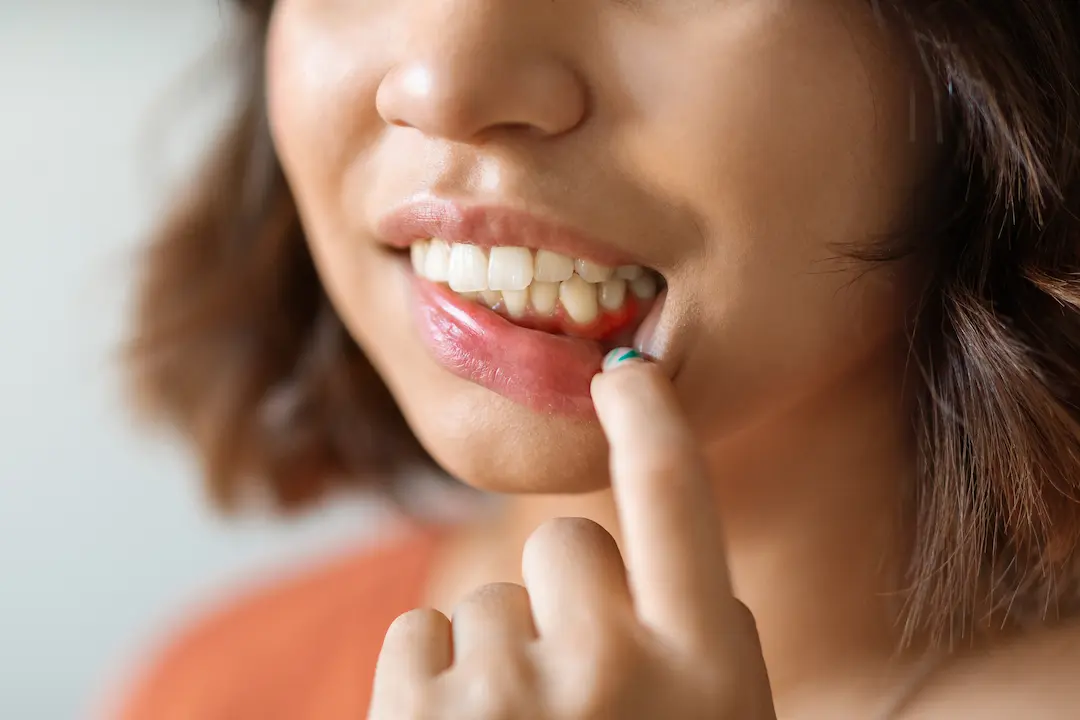
Gingivitis is an inflammatory condition that affects the gum tissue around the teeth. It is the most common and least severe form of periodontal disease, usually caused by a buildup of plaque and tartar on the surfaces of the teeth and gums. Although it is reversible, if not treated properly, it can progress to periodontitis, a more serious condition.
Main Causes
The development of Gingivitis is generally associated with a combination of factors, among which:
Poor oral hygiene
Tartar
Plaque bacterial accumulation
Smoking
Hormonal Changes
Possible Symptoms
Some of the most common symptoms of gingivitis include:
1
1
Redness and Swelling of the Gums
This is one of the first signs. Healthy gums have a pink appearance, but when inflamed, they become red and may show a slight increase in volume due to the accumulation of inflammatory fluids.
2
2
Bleeding When Brushing Your Teeth
Inflammation makes the gum tissues more fragile, causing frequent bleeding even with mild stimuli such as brushing or using dental floss.
3
3
Persistent Halitosis
The accumulation of plaque and food debris, along with inflammation, can lead to persistent bad breath, also known as halitosis.
4
4
Mild Gum Recession
In some cases, inflammation can lead to gum recession, exposing part of the tooth roots and making them more susceptible to dental sensitivity.
5
5
Gum Sensitivity
It can cause discomfort or even pain when pressing or brushing the affected area, due to increased sensitivity in the inflamed region.

If the symptoms persist or worsen, it is important to undergo a dental assessment. Even in the absence of severe pain, regular check-ups are essential to prevent complications.
Available Treatments
Available Treatments
The treatment of gingivitis varies according to the extent of the damage and its severity. Here are some of the most common treatments:
Improvement of Oral Hygiene
Maintaining a regular and effective oral hygiene is essential to reverse the condition. This includes brushing your teeth at least twice a day with a soft-bristled toothbrush and fluoride toothpaste. The use of dental floss daily is equally fundamental to remove food particles and plaque.
Maintaining a regular and effective oral hygiene is essential to reverse the condition. This includes brushing your teeth at least twice a day with a soft-bristled toothbrush and fluoride toothpaste. The use of dental floss daily is equally fundamental to remove food particles and plaque.
Improvement of Oral Hygiene
Maintaining a regular and effective oral hygiene is essential to reverse the condition. This includes brushing your teeth at least twice a day with a soft-bristled toothbrush and fluoride toothpaste. The use of dental floss daily is equally fundamental to remove food particles and plaque.
Professional Teeth Cleaning
A professional cleaning performed by the dentist or oral hygienist is essential to remove tartar (hardened bacterial plaque) accumulated on the teeth and below the gum line. This procedure reduces inflammation and facilitates the regeneration of gum tissue.
A professional cleaning performed by the dentist or oral hygienist is essential to remove tartar (hardened bacterial plaque) accumulated on the teeth and below the gum line. This procedure reduces inflammation and facilitates the regeneration of gum tissue.
Correction and Adjustment of Habits and Other Pathologies
It is important to address conditions that contribute to gingivitis, such as untreated cavities, compromised dental restorations, or poorly fitted dentures. These adjustments help prevent the recurrence of inflammation.
It is important to address conditions that contribute to gingivitis, such as untreated cavities, compromised dental restorations, or poorly fitted dentures. These adjustments help prevent the recurrence of inflammation.
Agreements and Partnerships
MALO CLINIC has agreements and partnerships that make it easier to access treatment, under specific conditions defined by each entity. You can also choose payment facilities depending on the type of treatment.




Agreements and Partnerships
MALO CLINIC has agreements and partnerships that make it easier to access treatment, under specific conditions defined by each entity. You can also choose payment facilities depending on the type of treatment.
Agreements and Partnerships
MALO CLINIC has agreements and partnerships that make it easier to access treatment, under specific conditions defined by each entity. You can also choose payment facilities depending on the type of treatment.
Frequently Asked Questions
1
Can this condition only be prevented by brushing teeth?
Yes, in the early stages, it can be reversed with a rigorous oral hygiene routine, including proper brushing and daily flossing. However, it is important to consult a dentist for professional oral hygiene and specific guidance.
2
Are oral mouth rinses effective in the treatment of gingivitis?
Oral antibacterial rinses, such as those containing chlorhexidine, can help reduce bacteria and inflammation. However, they should be used as a supplement and not as a substitute for brushing and flossing.
3
Does gum disease always cause pain?
Not always. Many people with this condition do not feel pain, but may notice symptoms such as swelling, redness, or bleeding of the gums.
4
Can smoking worsen gingivitis?
Yes, smoking is one of the main aggravating factors as it reduces the healing capacity of the gum tissue and increases the risk of progression to periodontitis.
5
How long does it take to treat gingivitis?
With the proper treatment and improvements in oral hygiene, it can begin to regress in a few days or weeks. The time varies according to the severity of the case and the patient's commitment to the dentist's recommendations.
6
Can children get gum disease?
Yes, gingivitis can affect people of all ages, including children, especially if they do not have proper oral hygiene habits.
7
What foods help to prevent?
Foods rich in vitamin C, such as oranges and kiwis, contribute to gum health. Fibrous vegetables, like carrots and celery, are also beneficial as they stimulate saliva production and help clean teeth naturally.
8
Can gum disease cause tooth loss?
Not directly. However, if left untreated, it can evolve into periodontitis, a condition that can cause bone loss and, eventually, premature tooth loss.
9
Can stress worsen gingivitis?
Yes, stress can compromise the immune system, making it difficult for the body to respond to the bacteria responsible for its cause.
10
Does pregnancy increase the risk of gingivitis?
Yes, hormonal changes during pregnancy can increase gum sensitivity and the risk of gum disease, a condition referred to as "pregnancy gingivitis".
11
Is it possible to completely prevent gingivitis?
With proper oral hygiene, regular dental visits, and a balanced diet, it is possible to significantly reduce the risk of developing this condition.
1
Can this condition only be prevented by brushing teeth?
Yes, in the early stages, it can be reversed with a rigorous oral hygiene routine, including proper brushing and daily flossing. However, it is important to consult a dentist for professional oral hygiene and specific guidance.
2
Are oral mouth rinses effective in the treatment of gingivitis?
Oral antibacterial rinses, such as those containing chlorhexidine, can help reduce bacteria and inflammation. However, they should be used as a supplement and not as a substitute for brushing and flossing.
3
Does gum disease always cause pain?
Not always. Many people with this condition do not feel pain, but may notice symptoms such as swelling, redness, or bleeding of the gums.
4
Can smoking worsen gingivitis?
Yes, smoking is one of the main aggravating factors as it reduces the healing capacity of the gum tissue and increases the risk of progression to periodontitis.
5
How long does it take to treat gingivitis?
With the proper treatment and improvements in oral hygiene, it can begin to regress in a few days or weeks. The time varies according to the severity of the case and the patient's commitment to the dentist's recommendations.
6
Can children get gum disease?
Yes, gingivitis can affect people of all ages, including children, especially if they do not have proper oral hygiene habits.
7
What foods help to prevent?
Foods rich in vitamin C, such as oranges and kiwis, contribute to gum health. Fibrous vegetables, like carrots and celery, are also beneficial as they stimulate saliva production and help clean teeth naturally.
8
Can gum disease cause tooth loss?
Not directly. However, if left untreated, it can evolve into periodontitis, a condition that can cause bone loss and, eventually, premature tooth loss.
9
Can stress worsen gingivitis?
Yes, stress can compromise the immune system, making it difficult for the body to respond to the bacteria responsible for its cause.
10
Does pregnancy increase the risk of gingivitis?
Yes, hormonal changes during pregnancy can increase gum sensitivity and the risk of gum disease, a condition referred to as "pregnancy gingivitis".
11
Is it possible to completely prevent gingivitis?
With proper oral hygiene, regular dental visits, and a balanced diet, it is possible to significantly reduce the risk of developing this condition.
Book your
Appointment
Fill out the form and our team will get in touch with you to schedule your appointment.
Book your
Appointment
Fill out the form and our team will get in touch with you to schedule your appointment.
Book your
Appointment
Fill out the form and our team will get in touch with you to schedule your appointment.
We accompany each step of your clinical journey, focusing on your comfort, confidence, and smile.
THE MALO CLINIC
Talk to us
(Call to the national fixed network)
@ 2026 ALL RIGHTS RESERVED - MALO CLINIC SA NIF 503411434 ERS No. 12920
Developed by
We accompany each step of your clinical journey, focusing on your comfort, confidence, and smile.
THE MALO CLINIC
Talk to us
(Call to the national fixed network)
@ 2026 ALL RIGHTS RESERVED - MALO CLINIC SA NIF 503411434 ERS No. 12920
Developed by