What are invisible aligners?
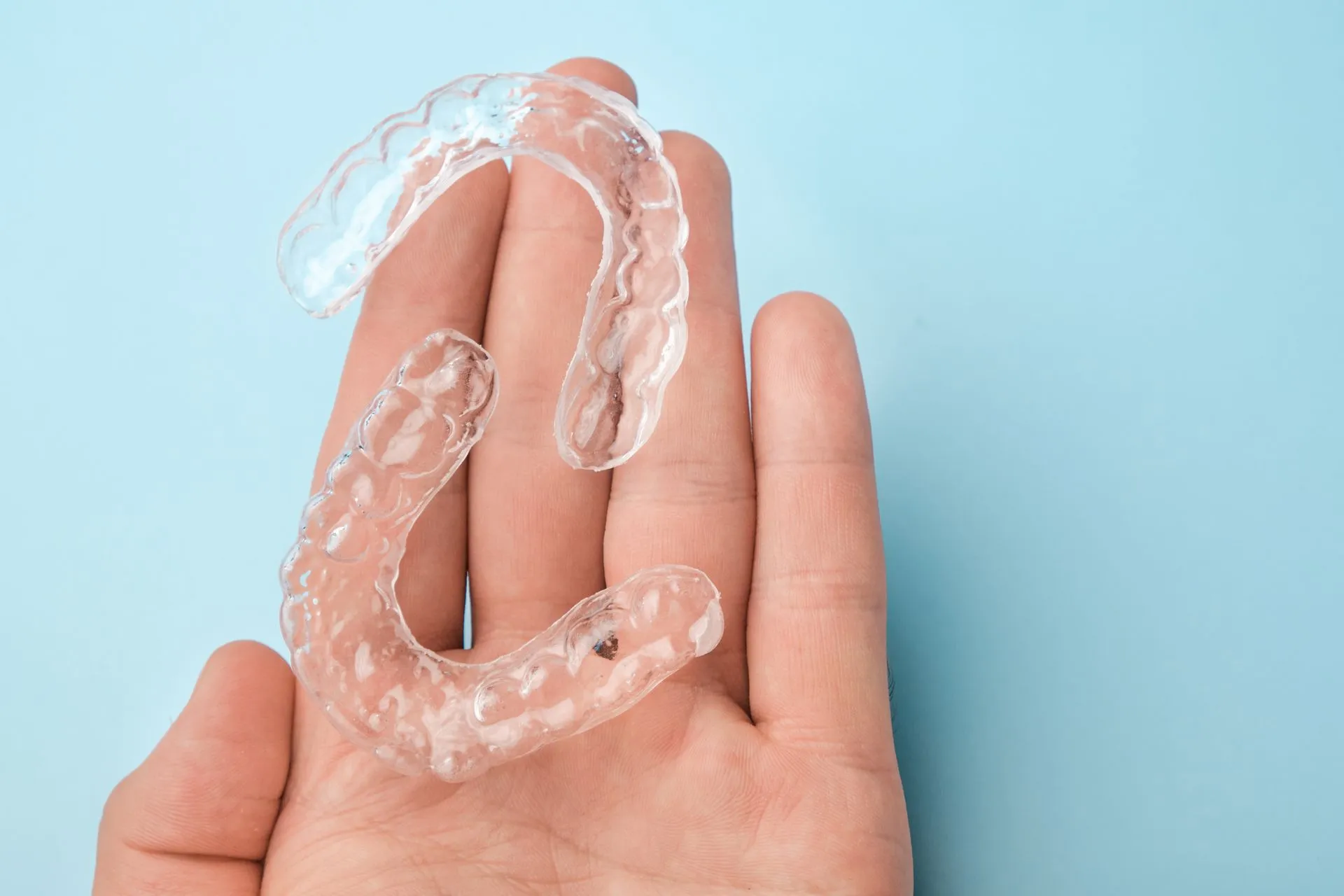
Invisible aligners, also known as clear orthodontic appliances, are an alternative to traditional orthodontic braces aimed at correcting issues of malocclusion and misalignment of teeth. Being made from a clear thermoplastic, these aligners allow for the correction of tooth position in a more comfortable and discreet manner, being recommended for both adults and children with mixed dentition.
How do invisible aligners work?
Aligners are removable, continuous-use appliances made from a semi-flexible and very durable material that applies forces to the dental arch to gradually correct the position of the teeth. Through 3D computerized technology, each appliance is built and personalized to the needs of each patient.
Treatment process with invisible aligners: steps to follow
As with any procedure, the treatment process with invisible aligners involves a series of steps to ensure its success:
Assessment consultation: before starting treatment, it is essential for the patient to have an initial consultation with an orthodontist to evaluate their situation and determine if invisible aligners are indeed the appropriate treatment.
Digital dental records: after the first consultation – and if treatment with invisible aligners is recommended – the orthodontist will conduct a series of examinations, such as radiographic exams, intraoral and extraoral photographs, intraoral scans, and a clinical examination. These records will enable a thorough diagnosis and planning of the entire treatment.
Preparation of the aligners: based on the records, the orthodontist will make the diagnosis and planning, and the aligners will be created in 3D using specific software. Thanks to the technology used, the patient will have access to a visualization of the entire treatment plan and a simulation of the outcome.
Start of treatment: approximately 20-30 days after the planning has been completed, orthodontic treatment begins. On this day, the patient receives the respective aligners, the placement of attachments will be carried out - small, nearly invisible composite resin pieces placed on some teeth, which allow the aligner to apply the necessary pressure for tooth movement - and all questions related to care during treatment will be addressed.
Using the aligners: from this step, and according to what the dentist has established, the patient can change their aligners on their own, with the aligner being changed every 7-14 days, without assistance from the dentist, until the next consultation. The aligners should be worn 22 hours a day, only removed for eating and oral hygiene routines.
Routine check-ups: finally, in order for the desired outcome to be achieved, the patient must keep routine appointments with the orthodontist throughout the treatment to monitor their progress and receive new sets of aligners. Follow-up appointments are conducted every 8 to 10 weeks.
Advantages of invisible aligners
The use of invisible aligners has been increasingly common, with a high number of patients opting for this solution instead of conventional orthodontic appliances. Here are some of the main advantages of this treatment:
More discreet use: being transparent, the aligners are virtually invisible, which is very important for those who wish to correct their dental alignment without the treatment being noticeable.
Increased comfort: the aligners are made from a smooth and flexible material, which enhances comfort. Additionally, as they are made according to the characteristics of each patient, they do not cause sores or irritations like some traditional appliances.
Reduced risk of cavities and gum diseases: unlike fixed appliances, invisible aligners can be removed by the patient during meals or for oral hygiene, which helps reduce the risk of cavities and gum disease.
Greater predictability of results: due to the use of advanced software, it is possible to accurately demonstrate the final result of the treatment to the patient, even before it begins.
Fewer maintenance appointments: compared to conventional appliances, invisible aligners generally require fewer maintenance appointments with the orthodontist.